Combo Phục hình cố định full zirconia dán trên thanh bar
Khai Nguyên Dental Laboratory

Fixed Restoration Combo: Full Zirconia Bonded on Bar

A fixed full-arch implant restoration: a CAD/CAM titanium bar screwed onto the implants, with a multilayer zirconia superstructure bonded to the bar. The bar carries the load, the zirconia provides the esthetics, and the superstructure can be replaced later without touching the bar. For multiple-tooth or full-arch cases with implants in place.

Three structures for a fixed full-arch implant restoration

  • Zirconia bridge screwed directly onto multi-unit abutments: few components, low profile, good esthetics; but all load goes through the zirconia, with a risk of cracks around access holes if the framework is thin or the fit is not passive.
  • Full contour on an iBar: a CAD/CAM titanium bar screwed onto the implants, with monolithic zirconia milled to cover the bar and bonded to it. The titanium bar carries the load and the zirconia provides the esthetics, reducing zirconia fracture. It needs enough restorative height for both bar and zirconia.
  • Split iBar: a separate titanium bar with the teeth and gingiva milled separately, then bonded or screwed onto the bar. The superstructure can be repaired or replaced later without touching the bar, and the bar is easier to polish.

We advise on the structure based on restorative space, number of implants and esthetic demands. The detailed comparison is in full contour vs split iBar. For long-span or cantilever bridges on natural teeth, see an I-bar under zirconia.

Passive fit

Implants integrate directly into bone, without a periodontal ligament to absorb misfit. A bar connecting several implants must therefore fit passively: it seats correctly without the screws pulling it into place. If it has to be pulled, the residual stress stays in the system and shows up later as screw loosening, screw fracture or bone loss around the implants. More in bar-supported full-arch restorations.

Our process

  1. Implant positions verified on the model with a verification jig before design. With intraoral photogrammetry (IPG), implant positions reach us digitally.
  2. Teeth first, bar second: the teeth are set to the vertical dimension, midline and lip support from the bite record and facial photos, then reduced inward to form the bar so the bar supports every tooth without showing where the tissue is thin.
  3. Titanium bar milled and fit-checked with a one-screw test (Sheffield test) on the model; if a gap appears at the opposite end, the bar is not passive and is remade before the zirconia is milled.
  4. Multilayer zirconia milled, sintered and tried on the bar so the bonding cement layer is thin and even.
  5. Bar and tissue-facing surfaces polished for easy hygiene.
  6. Esthetic finishing: staining, glaze firing, pink ceramic; the superstructure bonded to the bar following the cement manufacturer’s protocol and excess cement removed.

What to send us

  • Implant positions: an impression with splinted impression copings, or a scan with the correct scan bodies plus a verification scan; IPG data if available.
  • A verification jig tried in the mouth, or ask us to make one for you to try before the bar is milled. This is the cheapest step to avoid remaking a titanium bar.
  • The implant system and multi-unit type; a bite record at the intended vertical dimension, facial and smile photos.
  • Agreement on screw-access positions and the thickness of the anterior superstructure; tooth and gingival shades.

Turnaround and warranty

Full-arch implant restorations are scheduled case by case, since the number of try-ins depends on the treatment plan. Covered by our general warranty (6 months to 15 years depending on the material).

Cases from our lab

Other implant options are on implant bridges and crowns. To discuss a specific case, contact our team or start through the ordering process.

Written for dentists and technicians. Khai Nguyen Dental Lab manufactures to clinical prescription only and does not sell directly to patients.

Please leave your information with us. We will get back to you as soon as possible.

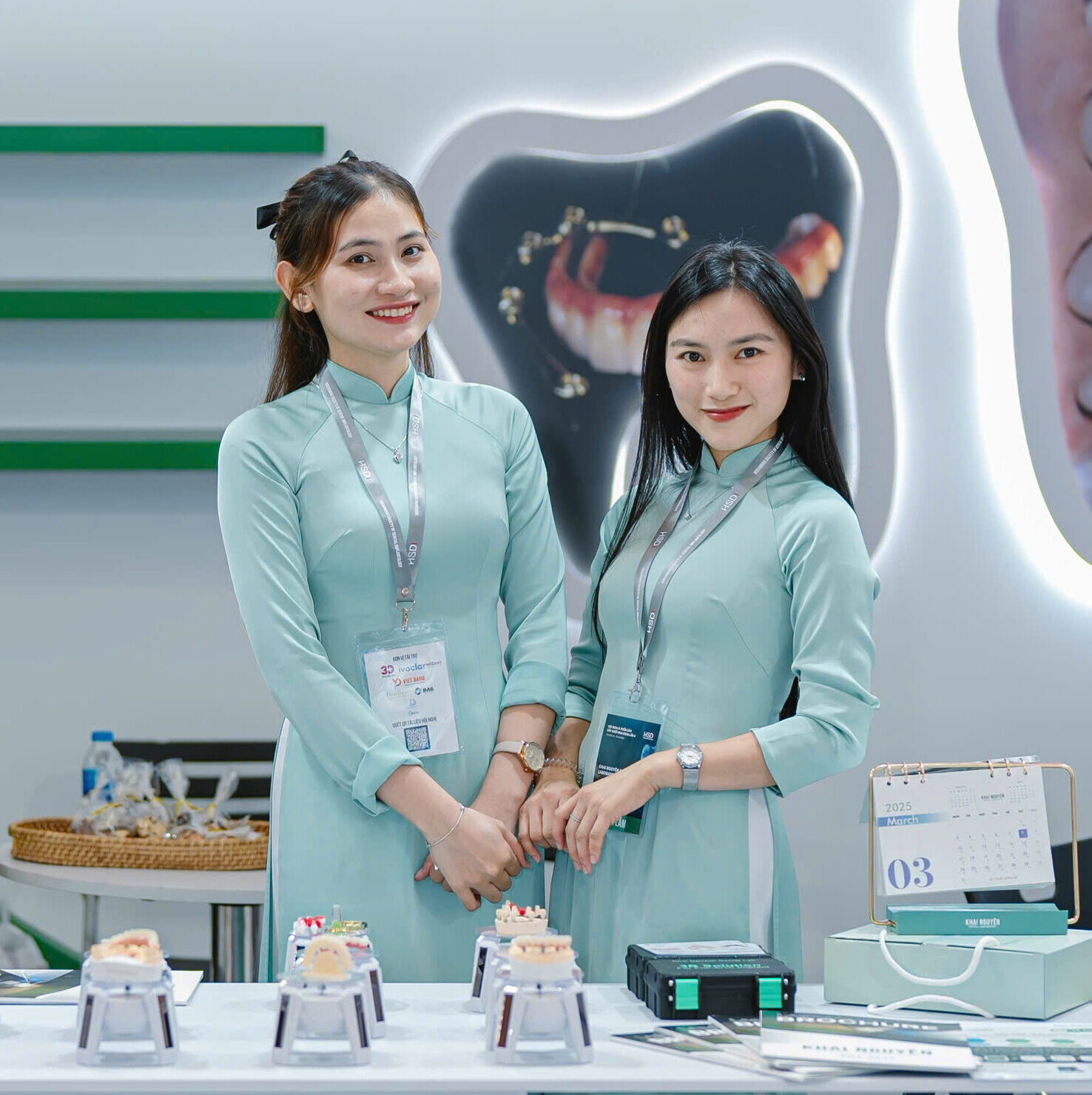
Khai Nguyen Lab at HSDI 2024