
Khí cụ chống ngưng thở khi ngủ (chống ngáy)
Khai Nguyên Dental Laboratory

Sleep Apnea Appliance (Anti-Snoring Device)

A mandibular advancement device (MAD) for snoring and obstructive sleep apnea, made in medical-grade resin meeting FDA standards to the advanced bite the dentist records. We make it only for diagnosed patients, on a dentist’s prescription.
What we make

Our anti-snoring and sleep apnea appliance is a mandibular advancement device (MAD): two trays covering the upper and lower arches, linked so that the mandible is held forward during sleep, which opens the airway behind the tongue. The amount of advancement is the dentist’s decision and is adjusted at follow-up; we fabricate to the jaw position you record.

Material: medical-grade resin meeting FDA standards, custom-made on each patient’s models.

Indications and limits

  • Primary snoring and mild to moderate obstructive sleep apnea (OSA), or OSA patients who cannot tolerate CPAP, once diagnosed by polysomnography.
  • The appliance does not replace diagnosis and follow-up by a sleep physician; its effect should be re-assessed once the patient is wearing it.
  • Enough stable teeth in both arches are needed for retention; the dentist checks the TMJ and periodontal status before prescribing.

What the literature reports

A meta-analysis in adult sleep apnea patients found that mandibular advancement devices reduced the apnea–hypopnea index (AHI) by 16.8 events per hour on average and the Epworth sleepiness score by about 4 points with long-term use (Yu M et al., PLoS One 2023, PubMed). A systematic review of 18 studies also reported efficacy in snoring with or without sleep apnea (De Meyer MMD et al., Sleep Medicine Reviews 2021, PubMed).

In the first weeks patients may notice TMJ discomfort, extra salivation or bite changes; the dentist monitors these and adjusts the advancement.

What to send us

  • Intraoral scans (STL/PLY) or impressions/models of both arches, showing the full dentition and gingiva.
  • A bite registration at the protrusive position you have chosen for delivery.
  • The diagnosis (primary snoring or OSA, and severity) and any notes: mobile teeth, fixed restorations, implant crowns, missing teeth.

Our process

  1. Check the models or scan files: complete arches, no voids or missing data.
  2. Mount the models at the advanced bite you recorded.
  3. Fabricate both trays in medical-grade resin meeting FDA standards and link them at the prescribed advancement.
  4. Trim, polish, check the fit on the models and ship with a storage case.

When the patient has restorations

The trays grip teeth and restorations, so please tell us where crowns, bridges or implant crowns are so we can reduce retention over them. If the patient is in the middle of restorative treatment, take the records for the appliance after the restorations are finished.

For bruxism protection or TMJ support without advancement, see the jaw stabilization splint. For impact protection in sport, see the custom sports mouthguard. To discuss a specific case, contact Khai Nguyen.

Written for dentists and technicians. Khai Nguyen Dental Lab manufactures to clinical prescription only and does not sell directly to patients.

The AASM/AADSM 2015 guideline: who does what

The joint clinical practice guideline of the American Academy of Sleep Medicine (AASM) and the American Academy of Dental Sleep Medicine (AADSM) on oral appliance therapy for snoring and obstructive sleep apnea (Ramar et al., J Clin Sleep Med 2015) recommends, for adults:

  • Sleep physicians prescribe oral appliances for patients who want treatment of primary snoring, and consider them for OSA patients who are intolerant of CPAP or prefer alternate therapy (STANDARD).
  • Once a sleep physician has prescribed therapy for OSA, a qualified dentist uses a custom, titratable appliance over non-custom devices (GUIDELINE).
  • The dentist oversees therapy to survey for dental side effects and occlusal changes, the sleep physician repeats sleep testing to confirm efficacy, and the patient returns periodically to both (GUIDELINE).

The sleep physician diagnoses and prescribes; the dentist selects, fits and follows up the appliance. We fabricate to the dentist’s prescription only.

What makes an effective appliance

The AADSM’s 2019 definition of an effective oral appliance (Mogell et al., J Dent Sleep Med 2019) sets these criteria:

AADSM 2019 criterionWhat it means for your order
Custom-made from impressions or scans and models of the patient, not a prefabricated item trimmed, bent or relinedSend full scans or impressions of both arches
Biocompatible material, engaging both archesWe use medical-grade resin meeting FDA standards; state whether you want a one-piece or two-piece design
Advances in increments of 1 mm or less, at least 5 mm of adjustment range, reversible, setting verifiableState whether you need an adjustable mechanism and the range
Patient can place and remove it; stays seated and holds the settingTell us about restorations, mobile and missing teeth

The definition also lists mild to moderate OSA and primary snoring as indications, and calls oral appliances accepted therapy for severe OSA when patients do not respond to or cannot tolerate positive airway pressure.

How much advancement, and titration

  • In the 18 studies reviewed by De Meyer et al. (2021), appliances most commonly reached 50–70% of maximum protrusion.
  • Bartolucci et al. (Sleep and Breathing 2016) analysed 13 randomized trials with 50–89% advancement: beyond 50%, more advancement did not significantly change the success rate (Q = 0.373, p = 0.541), and AHI improvement was not proportional to advancement. Evidence quality was moderate (GRADE).

The dentist sets a starting position and titrates; the sleep physician confirms with a follow-up sleep test. To build the starting position correctly, please also note:

  • Maximum protrusion (mm) and the advancement for delivery (mm or %).
  • Vertical opening at the incisors in the bite registration (mm).
  • Whether you want room for further forward adjustment.

Long-term side effects and follow-up

The 2015 guideline notes that most side effects are dental: sore teeth, gum problems, sore jaw muscles and excessive salivation; appliances may also aggravate TMD and cause dental misalignment. Pliska et al. (J Clin Sleep Med 2014) measured casts of 77 patients treated for a mean of 11.1 years: overbite fell by 2.3 mm and overjet by 1.9 mm, with new anterior crossbites and posterior open bites, and the changes kept progressing.

  • Baseline records: scan both arches in maximum intercuspation before delivery, to compare at reviews.
  • Periodic reviews: with the dentist for teeth, occlusion and TMJ, and with the sleep physician for efficacy.
  • Remakes: after occlusal change or new restorations, send new scans and a new bite. See the file formats we accept and our ordering process.

Sources: Ramar K et al., J Clin Sleep Med 2015;11(7):773–827, doi:10.5664/jcsm.4858; Mogell K et al., J Dent Sleep Med 2019;6(3), doi:10.15331/jdsm.7090; De Meyer MMD et al., Sleep Med Rev 2021;56:101407; Bartolucci ML et al., Sleep Breath 2016;20(3):911–919; Pliska BT et al., J Clin Sleep Med 2014;10(12):1285–91.

Please leave your information with us. We will respond to you as soon as possible.

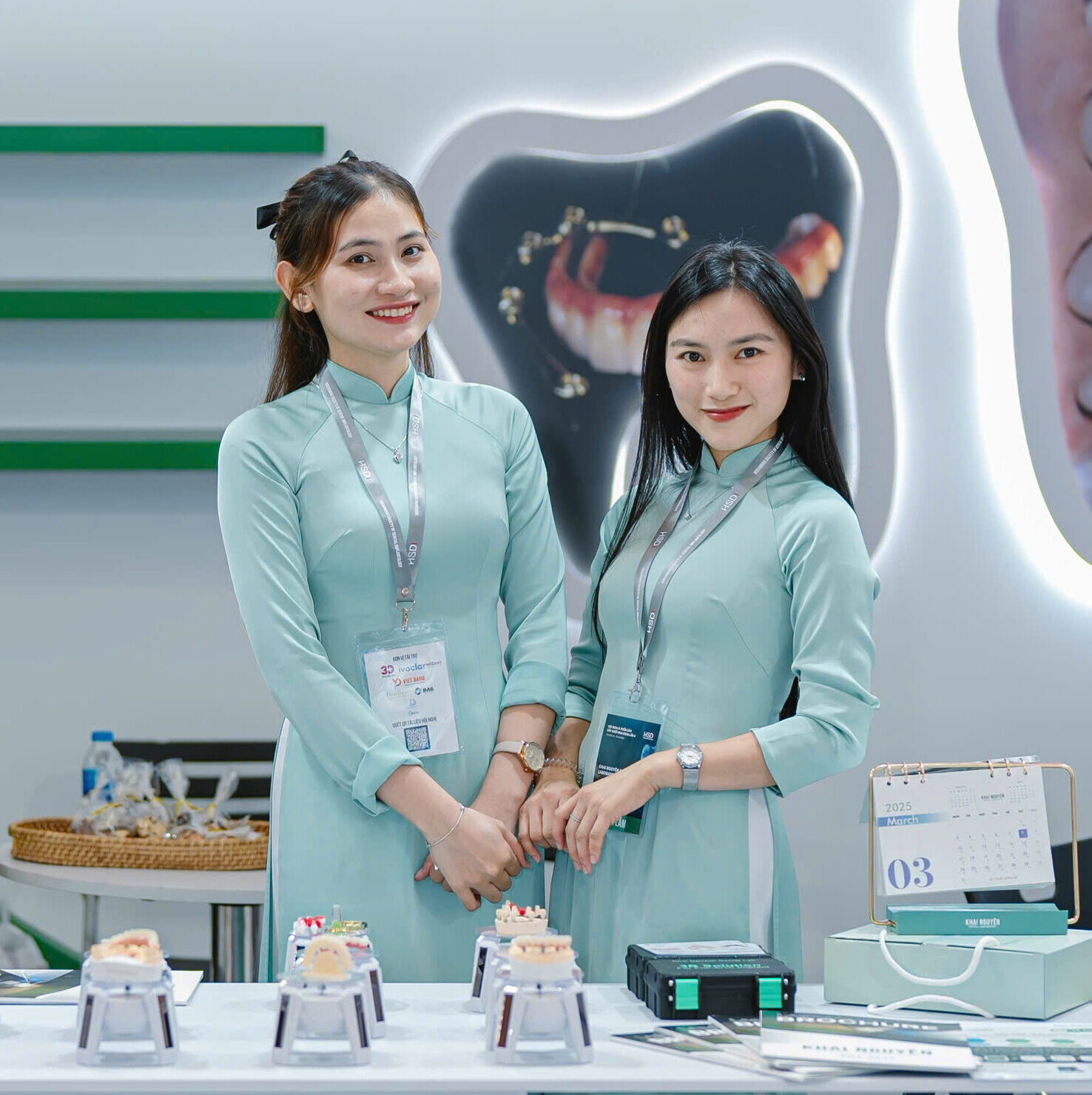
Khai Nguyen Lab at HSDI 2024