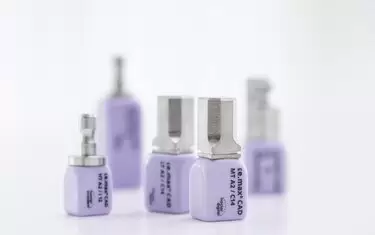

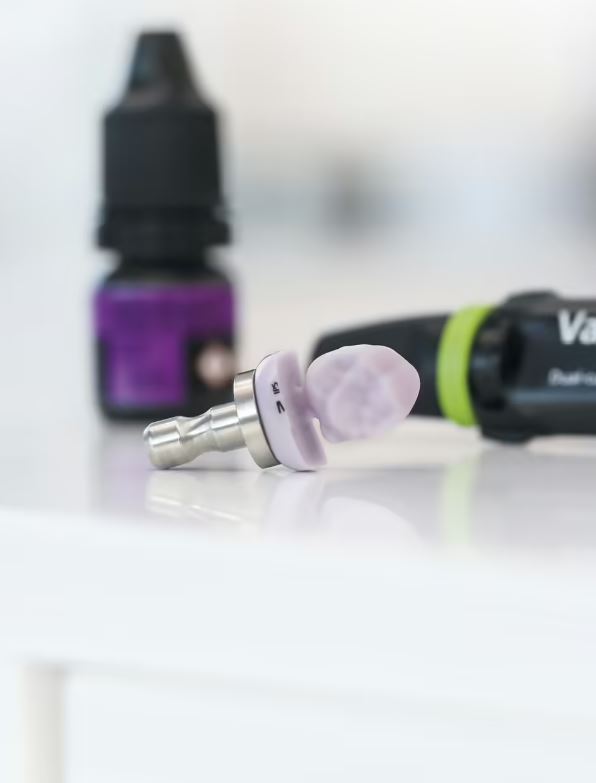
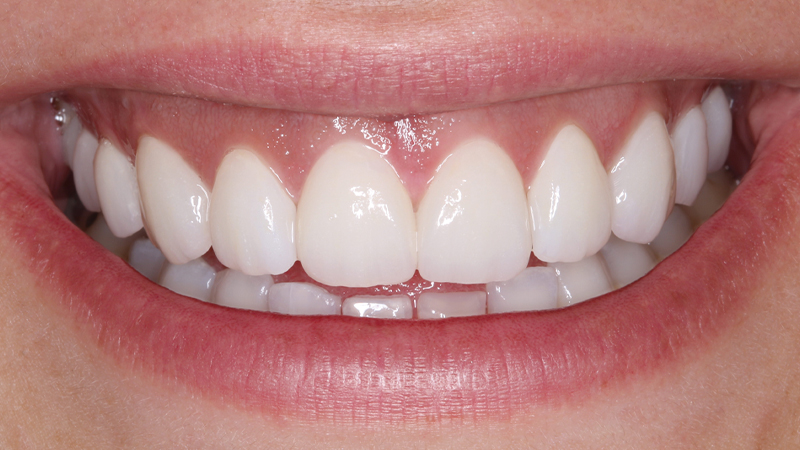
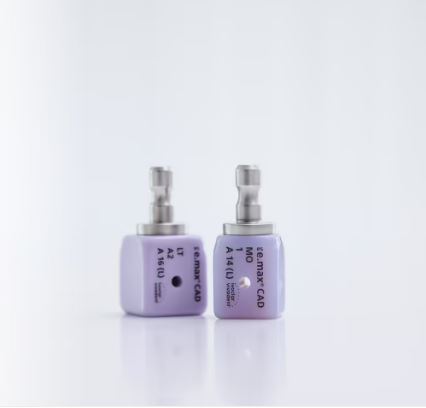
Emax CAD (Lithium Disicilicate)

As dental CAD/CAM systems make their way into clinics, the vision of producing indirect ceramic restorations in the practice has become reality. A 3D intraoral camera for digital impressions, intuitive design software, and a milling unit are the technologies that allow restorations to be produced on site in a short time compared with sending them to a dental laboratory.

Beyond the time advantage, the digital approach also helps save resources such as impression materials. Moreover, the need for temporary restorations is eliminated.

97.2%

SURVIVAL RATE

530 MPa

FLEXURAL STRENGTH

5-Day

IN-LAB WORKING TIME

Material requirements for chairside production

The technical prerequisites for materials suitable for chairside production. These materials must be hard enough to ensure long service life. However, materials that are too hard are very difficult to process in milling units, especially since chairside production workflows are expected to take only a short time.

Furthermore, the material must also reproduce the outward esthetics of natural teeth to enhance the result. Chairside production is not intended for complex cases such as porcelain veneers. The term “monolithic restoration” fits well in this context. It describes a material that delivers full esthetic integration immediately, without rework. In addition, materials must provide suitable conditions for adhesive bonding, and tooth-conserving preparation techniques in particular should be prioritized.

Basic requirements for chairside materials

  • Good resistance to oral conditions
  • High strength
  • Quick, easy machining in milling units
  • Esthetic characteristics similar to natural teeth

Note: Adhesive bonding gives the best results immediately after tooth preparation.

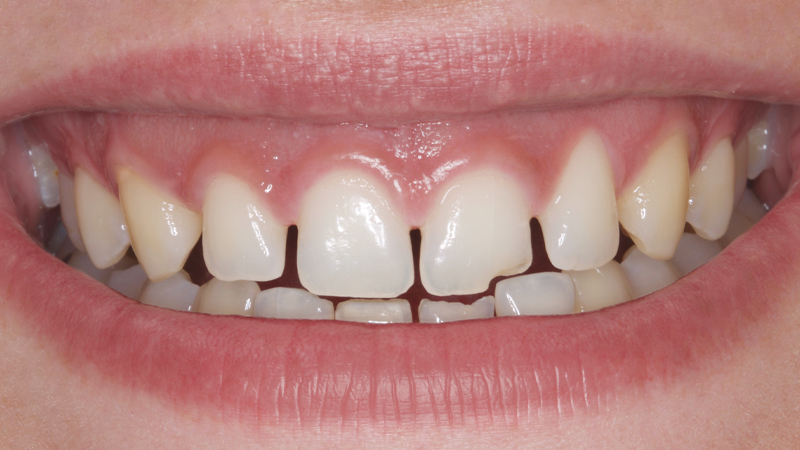
Real clinical cases

Before

After

Before

After

Technical specifications

Indications

  • Crowns
  • Inlays (internal fillings)
  • Onlays (e.g., occlusal veneers, partial crowns)
  • Veneers (porcelain laminates)
  • Three-unit bridges with the second premolar as the final abutment
  • Implant-supported hybrid restorations (hybrid abutments, crowns on hybrid abutments)

Composition

Lithium Disicilicate

Strength

530 MPa

Shade

A1, A2, A3, A3.5, A4, B1, B2, B3, B4, C1, C2, C3, C4, D2, D3, D4

Warranty Policy

None

More information

None
Brochure / Additional Resources

Brochure / Additional Resources – Khai Nguyen Dental Lab
DOCUMENT
IPS e.max CAD & ZirCAD brochure for dentists
Download
Brochure / Additional Resources – Khai Nguyen Dental Lab
DOCUMENT
CAD/CAM Chairside
Download