

A dental prosthetic technician supports dentists and clinics in fabricating dental prostheses, orthodontic appliances and other treatment aids (anti-snoring devices, bleaching trays, bite splints and more). At a Vietnam dental laboratory, this is a technical, precision-driven craft that requires the technician to be skillful and meticulous in every detail, combined with expertise in restorative dentistry.
Beyond a solid grasp of technology and esthetics, and assured hands-on skill, a technician is someone able to manage the technical equipment of a dental lab, work in a team or independently, and take part in training.
Job opportunities for dental prosthetic technicians are wide open, as demand for beauty and healthcare keeps growing.
In any healthcare field that protects human health, those who work in it must have certain qualities and skills. For a dental prosthetic technician at Khai Nguyen Dental Lab — fabricating prostheses and orthodontic appliances that are meticulous and perfect down to the smallest detail — the following skills are essential:
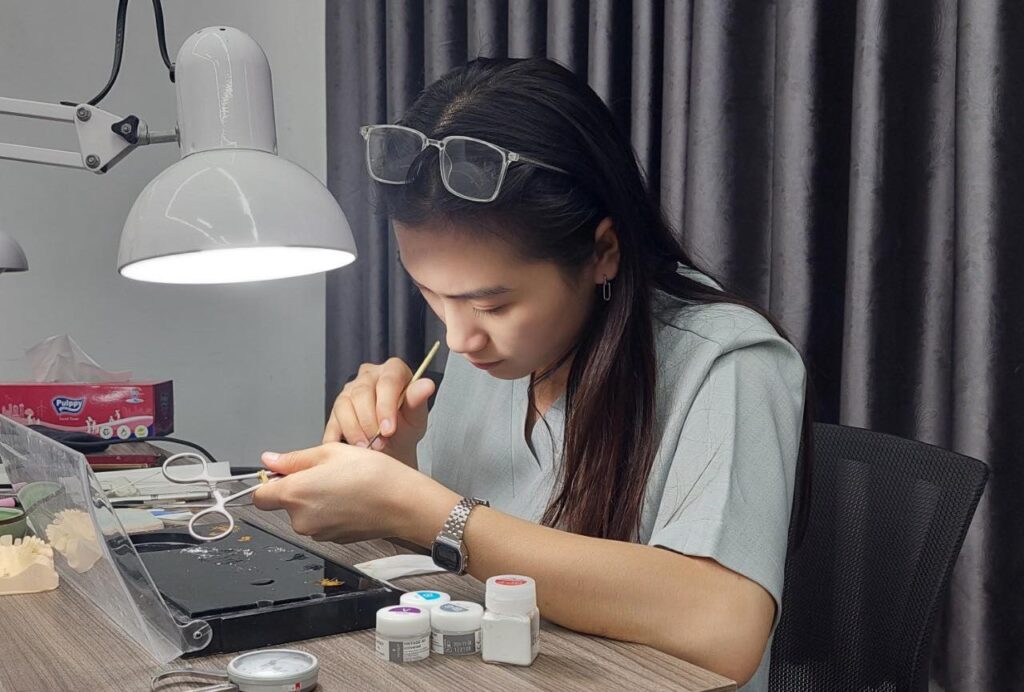
1. Dexterity, meticulousness and a strong eye for esthetics
- Every patient has a different dental problem and needs a dedicated lab design to correct it. So during fabrication, even a tiny deviation from the design, or a design that doesn’t match the occlusal model, can render the restoration unusable.
- The technician must therefore understand the patient’s oral structure thoroughly and be extremely meticulous in fabricating the components used for treatment.
- An eye for esthetics is also needed to choose a material color that matches each patient’s tooth shade. Translucency, opacity and the steps used to apply color must all be attended to in detail.
2. Intense concentration at work
- Along with care and meticulousness, intense concentration is needed when selecting materials and tooth colors.
- Components such as crowns, bridges and dentures are all milled and turned by modern machines — but this counts for little if the design step against the occlusal model contains errors, or if the fabrication plan is not optimal.
3. Listening and communication
- Listen to and absorb input from experienced dental technicians, dentists and industry experts.
- Listen to helpful sharing and feedback from colleagues to improve the quality of your own work.
- Good communication, strong teamwork and smooth coordination help your team finish products faster and with higher quality — and make exchanges with dentists easier and quicker.
4. Time management
- Dental prosthetic technicians must manage their time to complete work on schedule, so the dentist can continue treatment for the patient as promised and make adjustments if needed.
5. Patience, perseverance, care and continuous learning
- Dental prosthetics is far from simple. Creating a flawless product cannot be done overnight; it requires the technician to persevere in learning and absorbing knowledge and experience from department heads and industry experts.
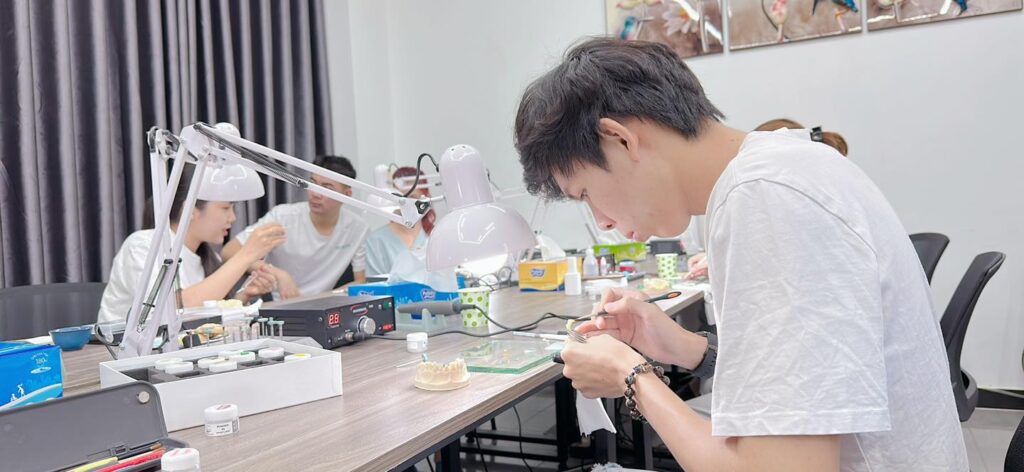
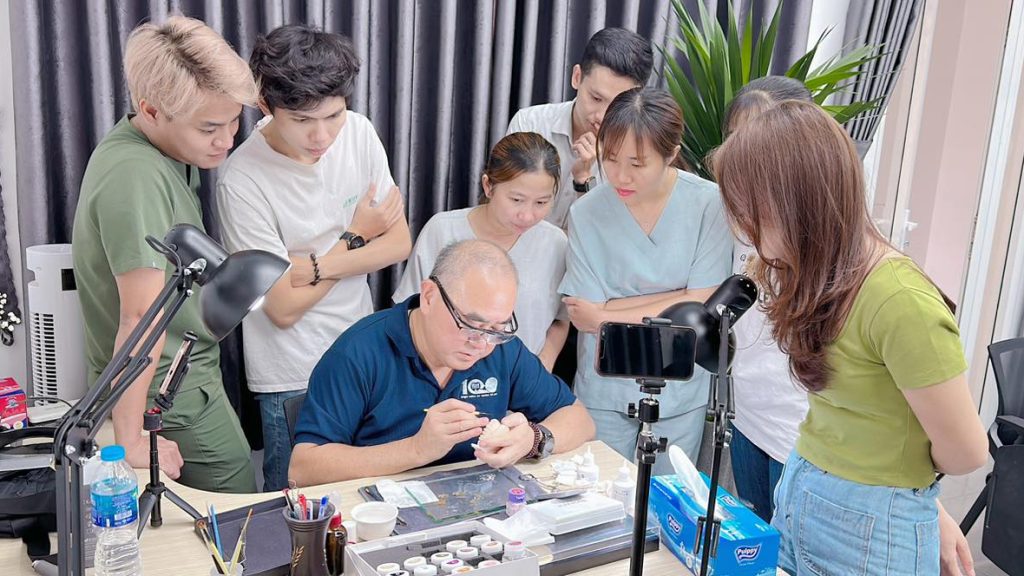
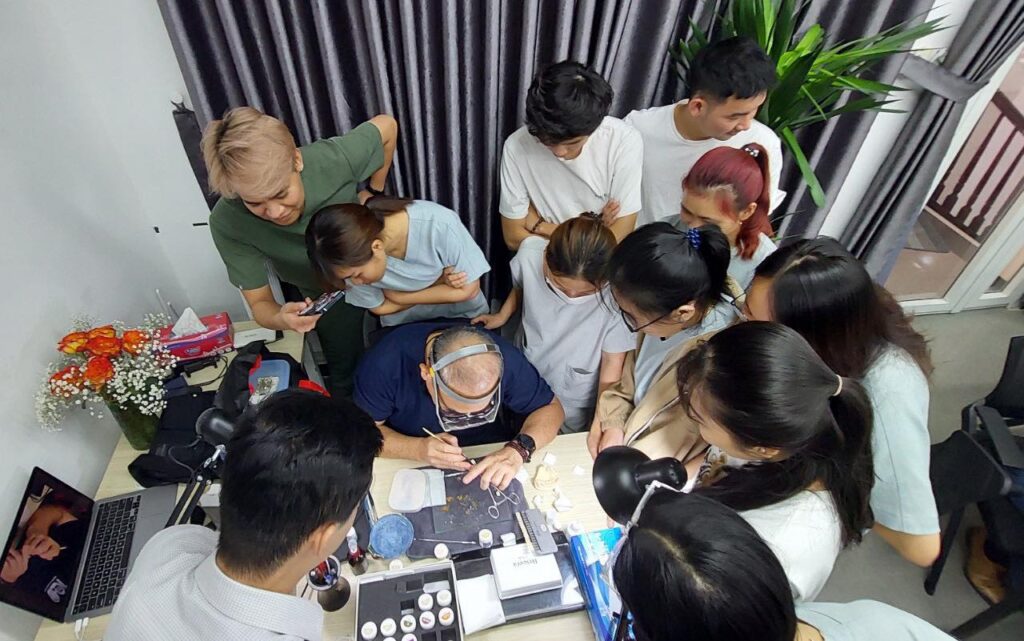
Perseverance, patience and meticulousness in dental restoration
6. Courage and the ability to handle work pressure
- Returns for adjustment are unavoidable, along with no small amount of feedback from dentists. The job therefore requires the technician to cultivate an optimistic, cheerful spirit, control their emotions, and calmly take in feedback to adapt to the customer.
7. Sharp observation and accurate judgment
- Beyond attention to detail, technicians should observe other highly skilled, experienced technicians to draw lessons for their own work.
- Sharp judgment ensures precision at every step of fabrication so the product reaches the highest level of perfection.
8. Good health, stamina and the ability to work long hours
- The work involves sitting in one place for long periods, with rotating shifts to meet clinic delivery deadlines. Technicians must therefore keep themselves in good health; otherwise it is hard to last long in this line of work.