

Case fabricated at Khai Nguyen Dental Lab to the treating dentist’s prescription, published on Instagram @khainguyendentallab on 4 June 2025. No patient-identifying information is included.
Case summary
| Indication | Ten pressed ceramic veneers, teeth 15 to 25 |
|---|---|
| Material | IPS e.max Press (Ivoclar) |
| Shade | A2 |
| Requested character | Clean, masculine tooth form with sharp line angles and intentional wear facets |
| Photo source | Instagram @khainguyendentallab, 4 June 2025 |
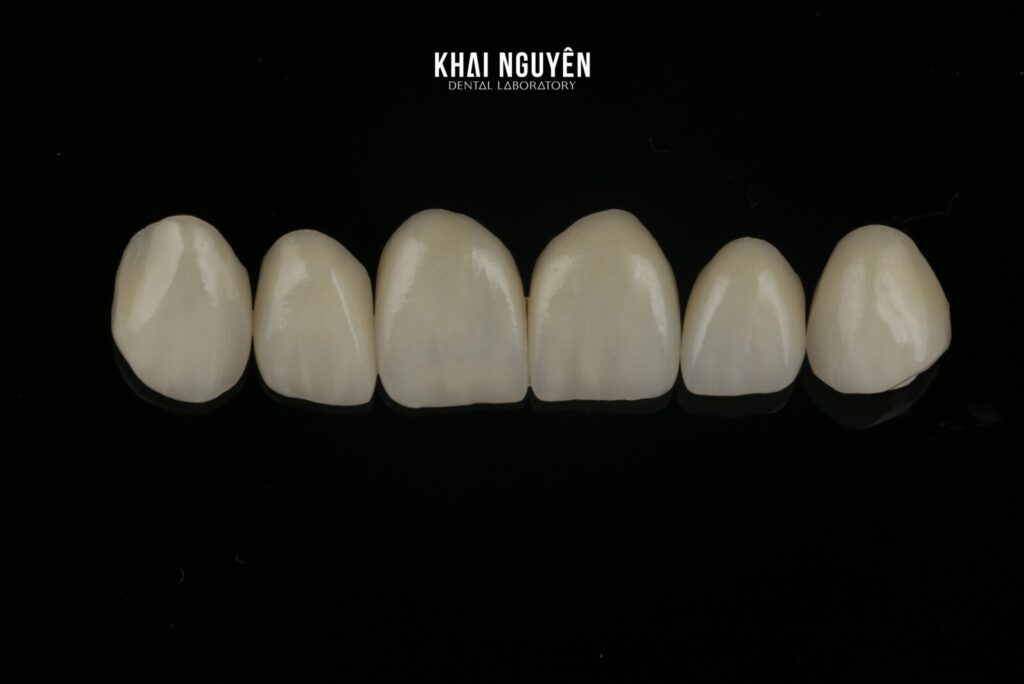
Photo above: the ten veneers on the model, frontal view.
What the dentist asked for
The patient wanted a strong, natural smile rather than a new-looking one. The prescription called for a naturally blended A2 shade with enhanced incisal translucency, a clean masculine form with sharp line angles, and purposeful wear facets that reflect the patient’s age and his own preference for a rugged, lived-in smile.
Why a “worn” veneer can look more natural
Most veneer requests aim for rounded, youthful incisal edges. On an adult man who asks for a lived-in look, perfectly intact edges and soft corners can read as artificial, because natural teeth at that age rarely look untouched.
The design therefore had to carry the character, not the shade alone:
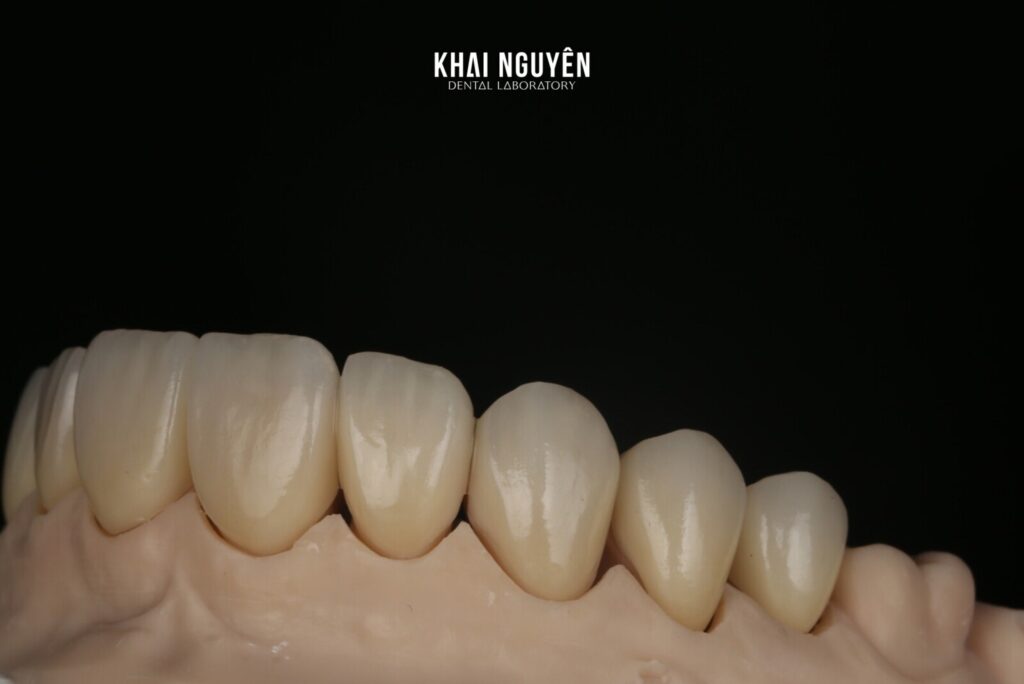
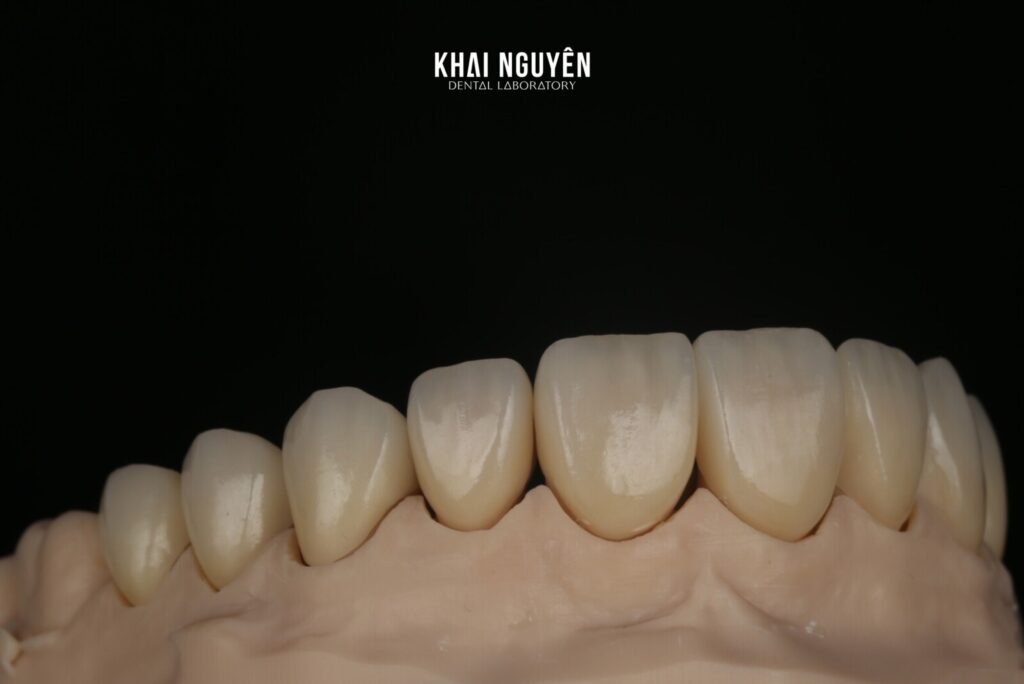
- Form. Flatter facial surfaces and defined line angles give the squarer, masculine outline the dentist described.
- Incisal edges. Small, deliberate wear facets break up an otherwise perfect edge line, so the arch looks used rather than new.
- Shade. A2 is a natural shade, not a bleach shade, so the effects stay in the incisal third: a translucent edge with a smooth transition into the body.
Material choice
For veneers that must show a translucent incisal edge, our approach with IPS e.max Press is to cut back the pressed lithium disilicate and layer the incisal third. The pressed core keeps the strength of lithium disilicate, while the layering carries the translucency the prescription asked for. The trade-offs between pressed systems are set out in e.max Press vs LiSi Press vs Vintage LD Press, and the choice against feldspathic ceramic in feldspathic or e.max veneers.
Notes for prescribing a characterised veneer case
- Describe the character in words. “Masculine, flat incisal edge, small wear facets on the centrals and canines” gives the lab far more to work with than “natural”.
- Tell the lab the patient’s age group and wishes. Wear facets on a young patient look wrong; on an older patient who asks for them, they are what makes the result believable.
- Send photos of the existing teeth and the opposing arch. Existing wear patterns are the best reference for how much character to add. Our guide to dental photography for the laboratory lists the views that help most.
- Approve the design before pressing. On request we send screenshots of the design first, so form and edge details are agreed before the case is produced.
Send a veneer case via WhatsApp +84 902 945 585 or read the ordering process. Dental laboratories can also send this kind of case to us lab-to-lab, shipped white-label.
Written for dentists and technicians. Khai Nguyen Dental Lab manufactures to clinical prescription only and does not sell directly to patients.