


Case fabricated at Khai Nguyen Dental Lab to the treating dentist’s prescription, published on Instagram @khainguyendentallab on 12 August 2025. No patient-identifying information is included.
Case summary
| Indication | Anterior veneers closing the spaces between the front teeth |
|---|---|
| Material | Hand-layered feldspathic porcelain |
| Technique | Layering on refractory dies, then divesting, trimming and sandblasting |
| Result | Before-and-after photos show the spaces in the upper and lower anterior teeth closed |
| Photo source | Instagram @khainguyendentallab, 12 August 2025 |
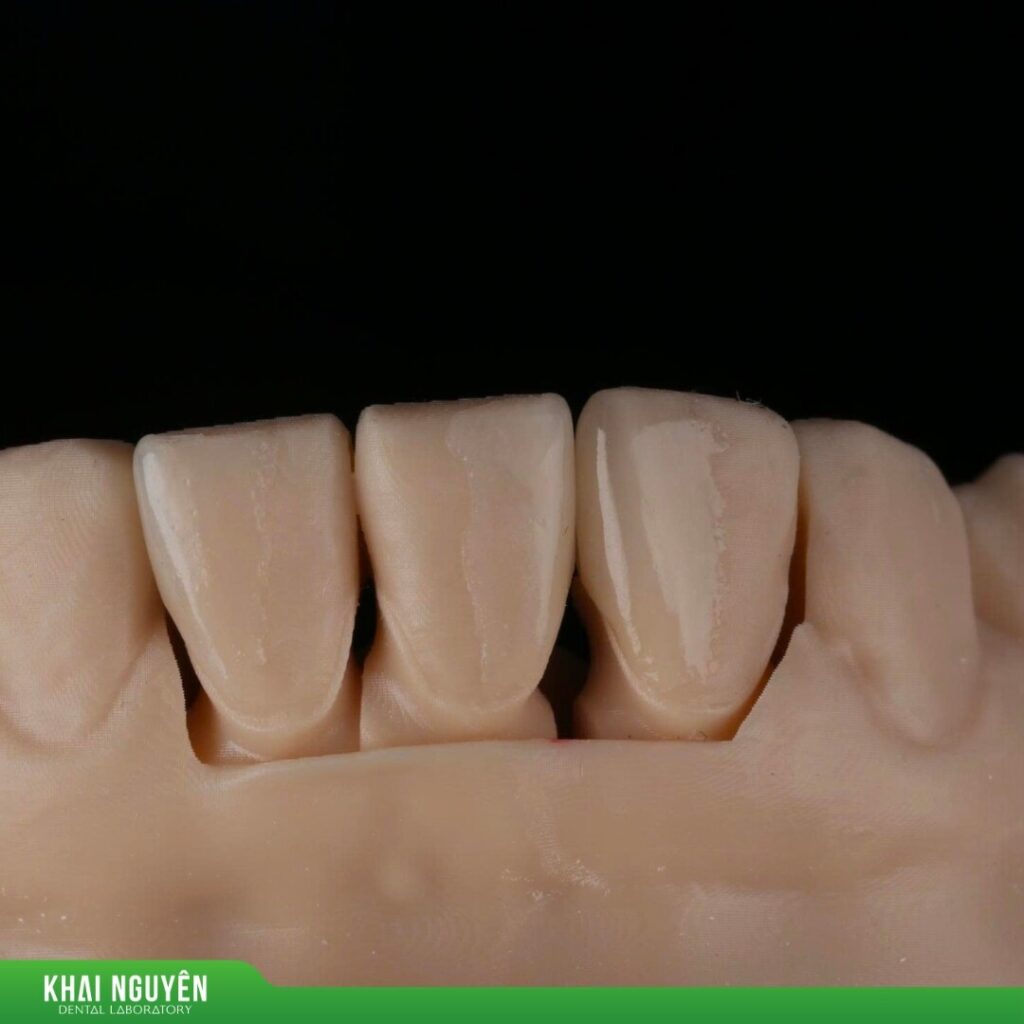
Photo above: the finished ultra-thin feldspathic veneers held on applicator sticks.
Why feldspathic veneers are made differently
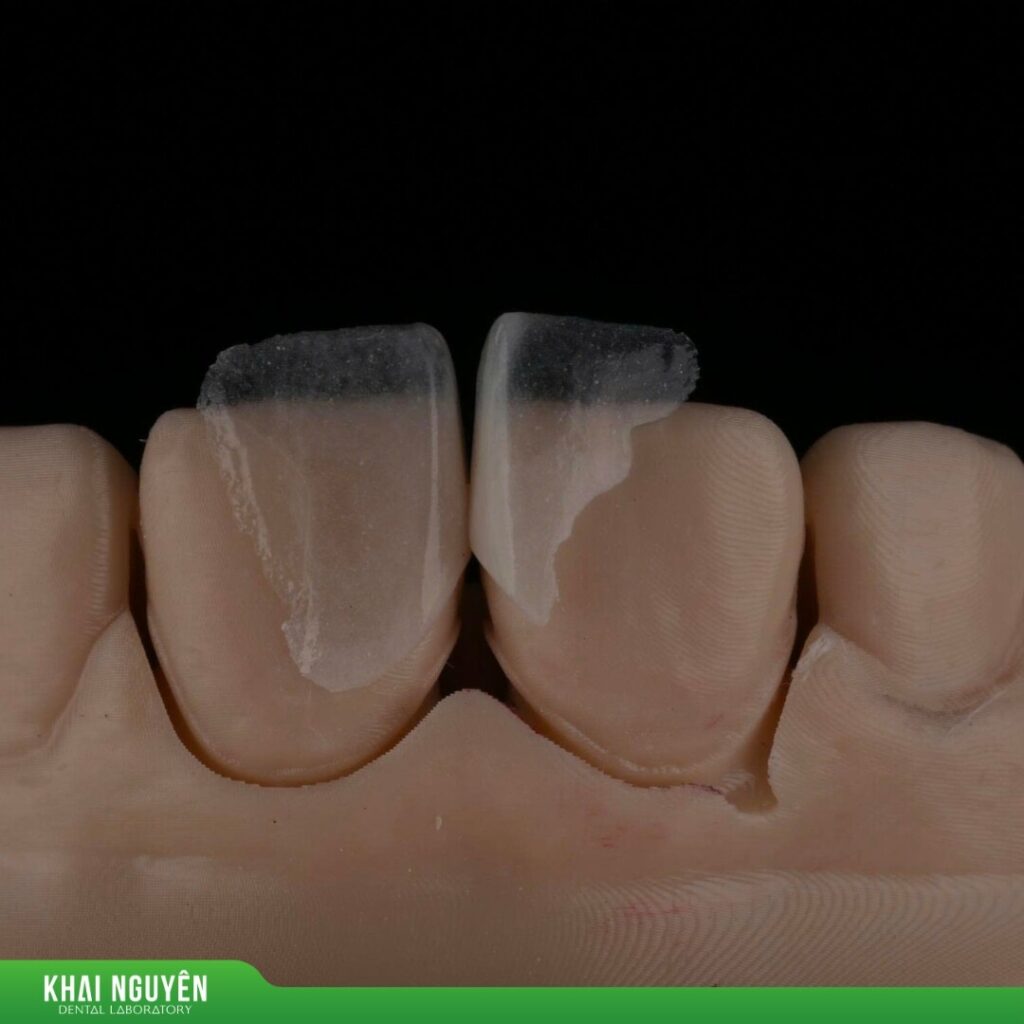
Pressed or milled veneers start from an ingot or a block. Feldspathic veneers are built by hand, layer by layer, directly on a refractory die: a copy of the prepared tooth made from an investment material that survives the porcelain firings. That is what allows a veneer only a few tenths of a millimetre thick, and it is also what makes the technique so demanding. Thickness limits for each material are compared in minimum veneer thickness.
The steps where a feldspathic case is won or lost
- Pouring the refractory model. Every later step depends on an accurate refractory die, so the model is poured and checked first.
- Layering the porcelain. Each layer is built by hand to recreate the translucency and colour of the neighbouring enamel. This takes patience; there is no pressed core to fall back on.
- Trimming the collar and sandblasting. The excess porcelain at the margin is cut back and the surface cleaned by careful sandblasting, without thinning the veneer where it is already at its limit.
- Separating the veneer from the refractory die. This is the real test. One slip at this stage can crack or chip an ultra-thin veneer, or lose it entirely, and the work starts again.
Because of these steps, feldspathic cases need more time than pressed work, including the occasional remake of a unit that fails during divesting. It is worth planning for that time when you schedule the seating appointment.
Result
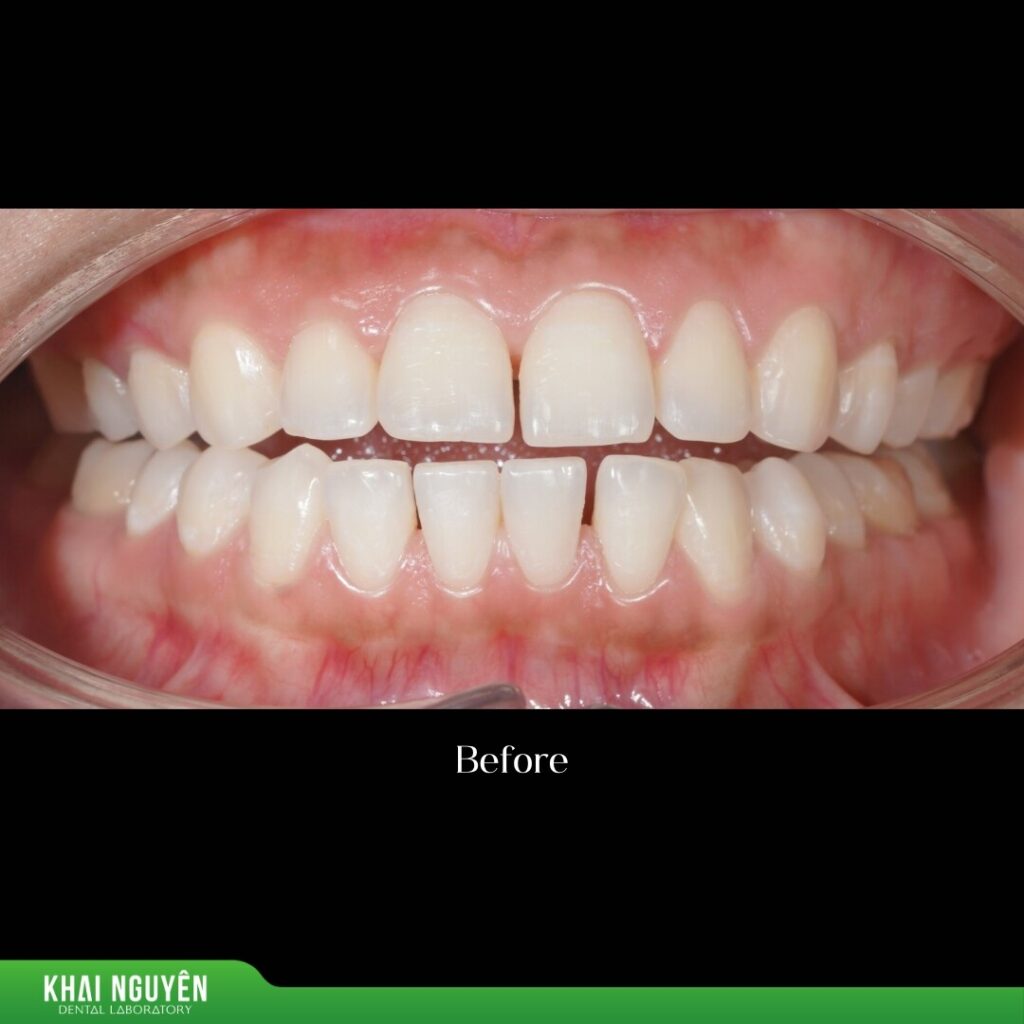
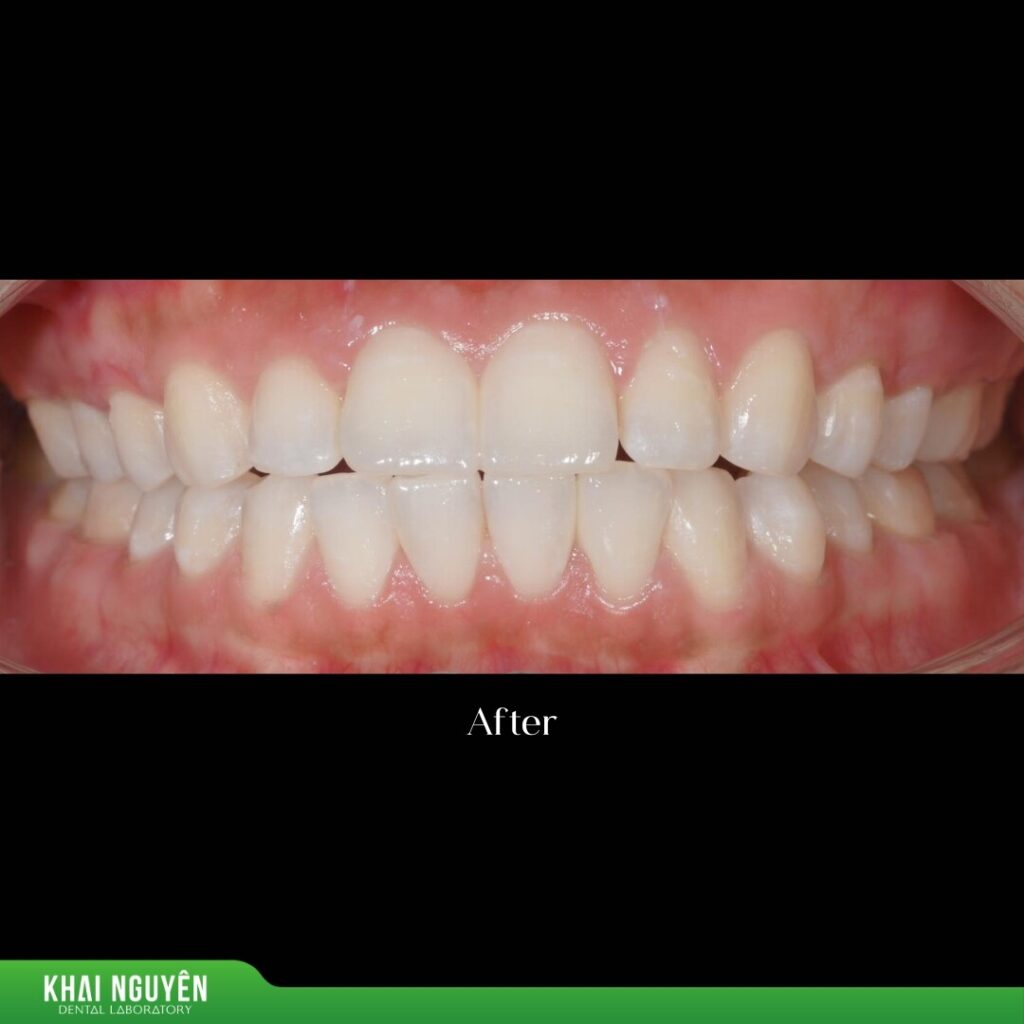
The before-and-after intraoral photos show the spaces between the anterior teeth closed, with the veneers following the form and colour of the natural teeth around them.
Notes for prescribing feldspathic veneers
- Choose feldspathic for thin, translucent cases. It is the most translucent option but masks almost nothing; for darker preparations a pressed ceramic is usually the safer choice. See feldspathic or e.max veneers.
- For space closure, send measurements or a wax-up. The lab has to decide how much width each tooth gains; a related two-unit case is in feldspathic veneers for diastema closure.
- Allow extra time. Hand layering and divesting cannot be rushed; agree the date with the lab before booking the patient.
Send a feldspathic case via WhatsApp +84 902 945 585 or read the ordering process. Dental laboratories can also send this kind of case to us lab-to-lab, shipped white-label.
Written for dentists and technicians. Khai Nguyen Dental Lab manufactures to clinical prescription only and does not sell directly to patients.