

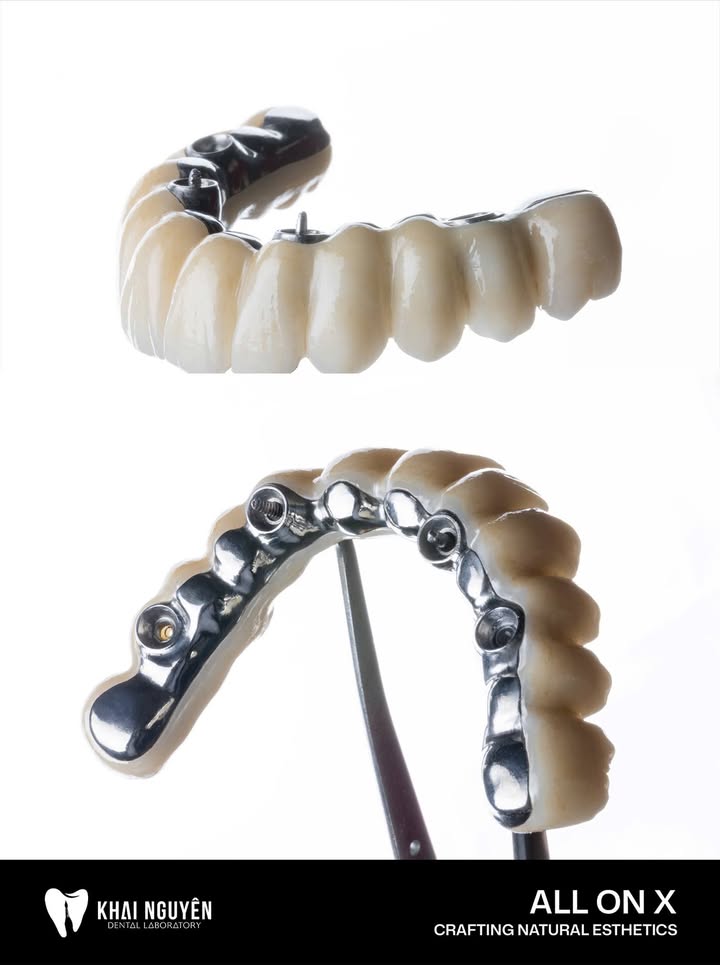
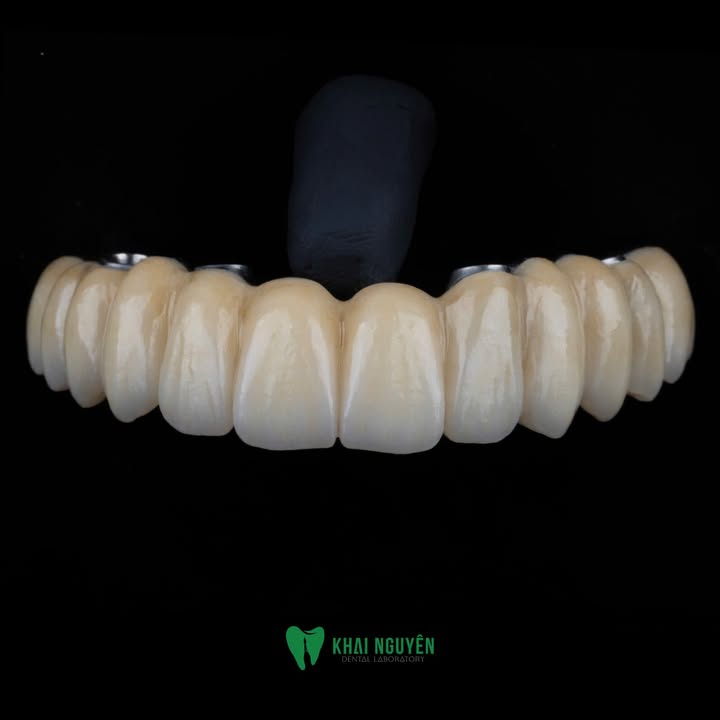
An All-on-4 case in the FP1 configuration, recently completed at Khai Nguyen on Aidite 3D Pro zirconia in shade A2.
How FP1 differs from the rest
In the classification of full-arch implant restorations, FP1 replaces the clinical crown only, not the gingiva. The restoration therefore has to terminate against the patient’s own soft tissue, which makes the ceramic-to-tissue interface the most important detail in the case.
In FP2 and FP3 designs, pink ceramic covers the transition zone. In FP1 there is nothing to hide behind. If the tissue surface is rough or has a microgap, plaque accumulates exactly where the patient finds it hardest to clean.
Why the lab polishes the tissue surface so carefully
On FP1 cases our team polishes the tissue-contacting surface with particular care, for biological safety and to keep the restoration cleansable. Properly polished zirconia has a far lower surface roughness than a glazed-only surface, and that roughness directly affects how much plaque accumulates around the restoration over time.
None of this shows in a smile photograph, yet it largely decides how healthy that restoration still is several years later.
What clinicians can use from this
When planning an All-on-X case, agree the FP1, FP2 or FP3 route with the lab early, because the choice changes both the design and the amount of finishing work involved. Photographs of the healed soft tissue and information about the smile line let the lab decide where the restoration should terminate.
See implant bridges and crowns, or contact our team.
Written for dentists and technicians. Khai Nguyen Dental Lab manufactures to clinical prescription only and does not sell directly to patients.