


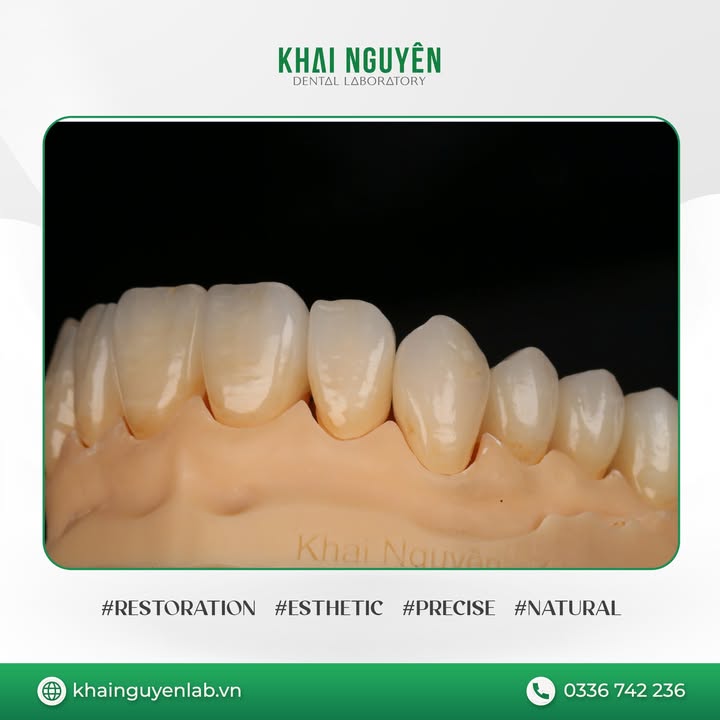
A case using the full-cutback technique: a Multi Zirconia blank with the facial surface cut back and ceramic layered onto the reduced area.
What full-cutback is, and how it differs from monolithic
A monolithic zirconia restoration is milled from the blank, then stained and glazed on the surface. It is fast and strong, but the colour effect sits on the surface, so optical depth is limited.
In a full-cutback, the technician reduces the facial aspect of the zirconia framework and layers ceramic over that area. The interior of the tooth stays dense load-bearing zirconia while the visible surface becomes multi-layered ceramic with genuine depth.
Why a multilayer blank
A multilayer blank already carries shade and translucency bands through its vertical axis. When the facial surface is cut back, the remaining core still holds the gradient from cervical to incisal, so the layered ceramic does not have to carry the whole colour effect and only adds the finest part of it.
The trade-off to know
Full-cutback delivers higher esthetics than monolithic, but layered facial ceramic is less durable than dense zirconia and needs sufficient space. In heavy load-bearing areas, or for a patient who brings a parafunctional habit, consider cutting back less, or keeping the posterior units monolithic.
What clinicians can use from this
When prescribing, state the priority plainly: maximum esthetics or maximum durability. The lab will then propose a full cutback, a partial cutback limited to the incisal third, or a monolithic result, depending on the restorative space and the patient’s functional habits.
See our zirconia range, or contact our team.
Written for dentists and technicians. Khai Nguyen Dental Lab manufactures to clinical prescription only and does not sell directly to patients.