

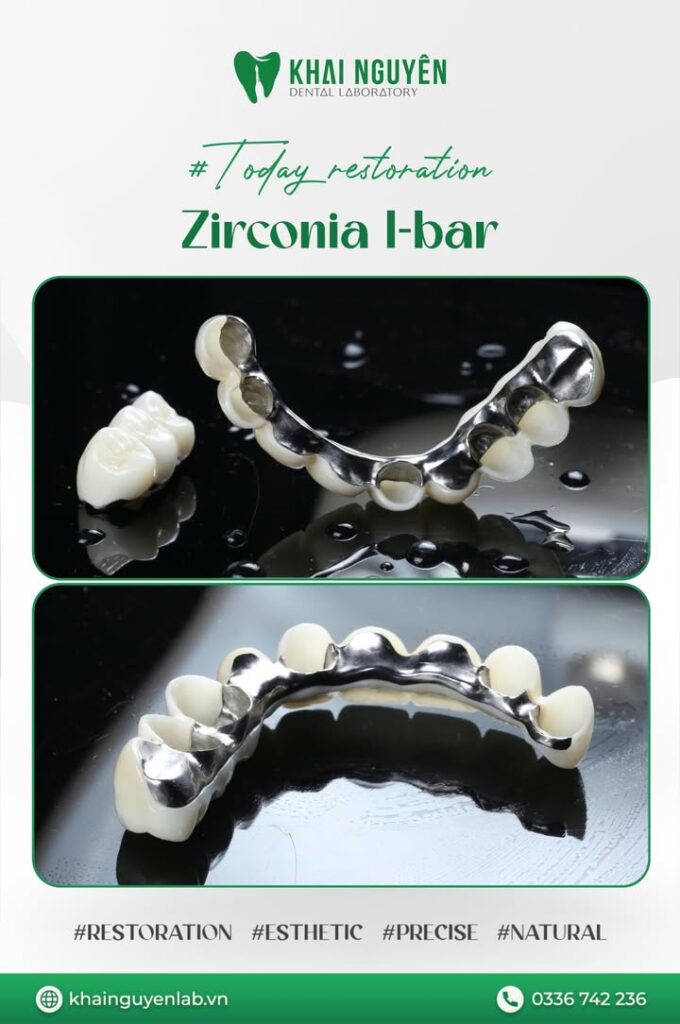
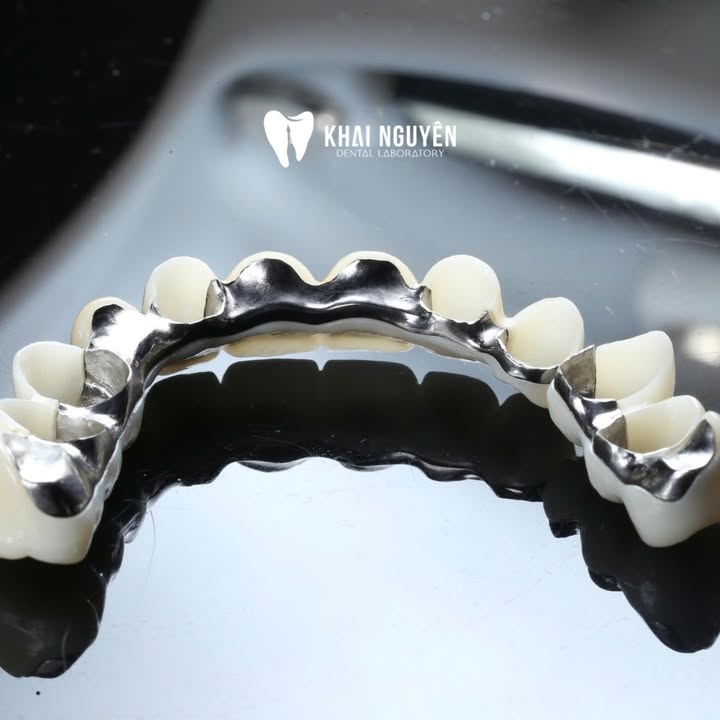
For restorations with a long span or a cantilever, where the restorative space allows it, an I-bar under zirconia is an option worth considering.
The problem with long spans and cantilevers
Deflection in a bridge span rises with the cube of the span length. Double the span and deflection increases roughly eightfold. With a cantilever, load also arrives off-axis on the abutment, which raises stress at the connector.
Zirconia on its own handles compression very well but is brittle under the tensile bending that occurs at connectors. That is why fractures in long-span bridges usually appear at the connector rather than mid-span.
How the I-bar addresses it
Three points make this solution worth considering:
- Load bearing. The metal acts as a reinforcing framework, reducing the risk of fracture at the connector.
- Stable esthetics. The zirconia facial surface masks the metal effectively and still meets esthetic requirements in conversation range.
- An additional treatment option. It gives the clinician a further safe route when planning complex long-span or cantilever cases.
When it applies
The condition is sufficient restorative space. The metal framework needs a minimum thickness, and the zirconia facing needs its own. If the interocclusal space is tight, the trade-off between strength and esthetics has to be settled before production, not at the finishing stage.
What clinicians can use from this
When sending a long-span case, state the span length, whether there is a cantilever, and the measured interocclusal space. Those three figures are enough for the lab to advise whether monolithic zirconia is sufficient or a reinforcing framework is warranted.
See our materials and restorations range, or contact our team.
Written for dentists and technicians. Khai Nguyen Dental Lab manufactures to clinical prescription only and does not sell directly to patients.