Victor Le – Digital Communications Manager, Khai Nguyen Dental Lab

Victor Le

Digital Communications Manager, Khai Nguyen Dental Lab

Digital Communications Manager at Khai Nguyen Dental Lab, with five years in communications and technical content for the dental laboratory field, responsible for editing technical articles together with the lab's technician team.

Articles by Victor Le

Which Intraoral Scanners Work With Our Lab? STL, PLY, DCM Files and Error-Free Digital Cases

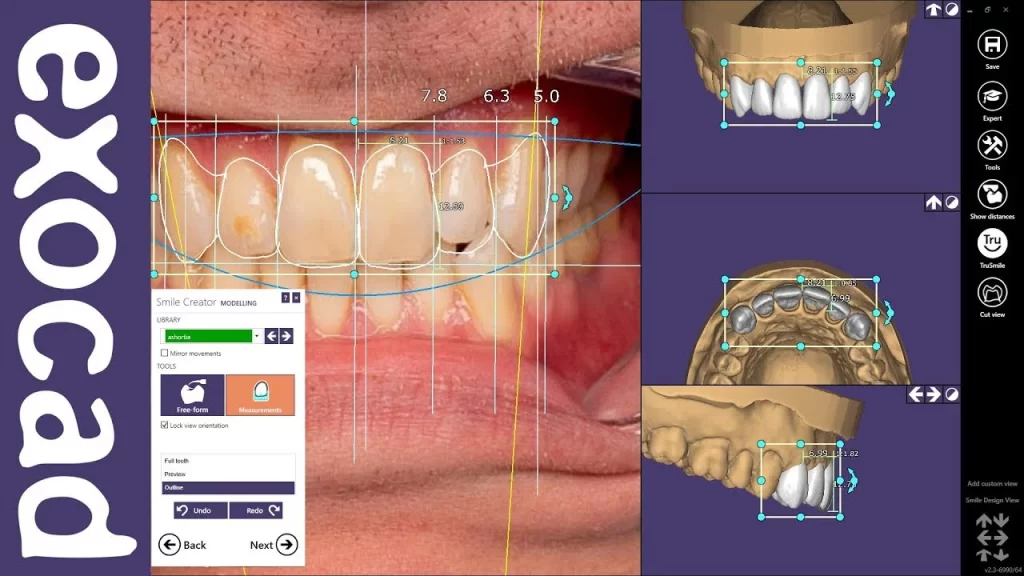
Exocad Smile Creator smile design interface

TL;DR: every current intraoral scanner can export an open STL, PLY or DCM file, and a lab can take that file straight into exocad. The real barrier is not “is my scanner compatible” but three small things: exporting the right format, sending complete data (both arches, bite, scan body for implants) and getting fast feedback when a scan has a defect. This guide lists how to export from each common scanner, the scan errors we see most, and how our lab responds.

The three file formats to know

  • STL: a plain triangle mesh, no colour. The most common format; every CAD package reads it. Sufficient for crowns, bridges and inlays/onlays.
  • PLY: like STL but with surface colour. Lets the technician see gingiva, margins and neighbouring teeth; export PLY when the scanner supports it.
  • DCM: 3Shape’s format, mesh with colour and case information. exocad reads DCM from TRIOS directly.

Closed native formats (for example native iTero files) must be exported to STL/PLY through the manufacturer’s portal before sending.

How to send files from common scanners

Scanner Export formats How to send to the lab Notes
3Shape TRIOS (3, 4, 5) DCM (default), STL, PLY 3Shape Communicate: add the lab as a partner and send the case; or export DCM/PLY and upload to the case portal Include the bite scan and photos; DCM keeps colour best
iTero (Element, Element 5D, Lumina) STL, PLY (via MyiTero) Add the lab to the lab list on the scanner or export STL from MyiTero and upload Export “open STL” with both arches and bite; native iTero files cannot be opened by the lab
Medit (i500, i600, i700, i900) STL, PLY, OBJ Medit Link: invite the lab as a partner and send directly; or export PLY PLY keeps colour; tick “both arches + occlusion” on export
Dentsply Sirona Primescan / Omnicam STL, PLY (Connect Case Center) Connect Case Center: add the lab and send; or export STL from Connect software Export “unlocked” so the lab can open the file
Carestream CS 3600 / 3700 / 3800 STL, PLY CS Connect or export and upload Check the bite covers both sides
Shining 3D Aoralscan STL, PLY, OBJ Shining cloud or export Export PLY to keep gingival colour
Planmeca Emerald STL, PLY Romexis Cloud or export

For files over 100 MB (full-arch colour scans) use the case portal or a download link; email is usually capped at 25 MB.

Minimum data for a digital case

  1. Scan of the prepared arch and the opposing arch.
  2. Bilateral bite scan in maximum intercuspation.
  3. Prescription: tooth number, restoration type, material, shade, due date. See the ordering process.
  4. Photos: preparation with a shade tab; smile photo for esthetic-zone cases.
  5. For implants: implant system, connection size, scan body type and a scan with the scan body seated.
  6. For esthetic cases: a pre-operative or mock-up scan if you want the morphology preserved.

Seven common scan errors and how to avoid them

  • Missing margin: retract and dry before scanning; rescan the area, not the whole arch.
  • Holes on occlusal or proximal surfaces: auto-fill invents morphology; angle the tip to close them.
  • Bite that does not align: patient not in habitual occlusion or one-sided bite scan; scan both sides and check on screen before sending.
  • Too few neighbouring teeth: capture at least 2–3 teeth each side so the lab can build morphology and contacts.
  • Saliva, blood, debris: creates false surfaces; dry and rescan.
  • Scan body not fully seated or wrong type: the implant crown will be off-axis; photograph the seated scan body.
  • Locked export: the lab cannot open it; choose open/unlocked export.

How our lab responds to a file

At Khai Nguyen every file is checked in the next working shift: margins, holes, occlusion and preparation depth against the chosen material. If there is a problem you receive an annotated screenshot with a suggestion (rescan one area, reduce further, or change material) before production starts. For esthetic cases you can request an exocad design preview to approve contour and contacts. In-lab time of 2–4.5 working days (depending on material and number of units) counts from file approval. Read more in turnaround time and shipping.

Frequently asked questions

Can I send digital cases without a scanner?

Yes. Ship the model or silicone impression; the lab pours and scans it on a desktop scanner and continues digitally. It only adds shipping time.

Is an older scanner that only exports STL enough?

Enough for crowns, bridges and inlays/onlays. For esthetic cases add photos to compensate for missing colour information.

Do you accept designs made in the clinic’s own software?

Yes. Send the design STL together with the original scan so the lab can check occlusion and thickness before milling or pressing.

See also the workshop on digital impression techniques and our guide to outsourcing to a Vietnam dental laboratory. To try a case: WhatsApp +84 902 945 585.

Written for dentists and technicians. Khai Nguyen Dental Lab manufactures to clinical prescription only and does not sell directly to patients.
3Y-TZP vs 5Y-PSZ Zirconia: Strength, Translucency and Which Disc for Which Case

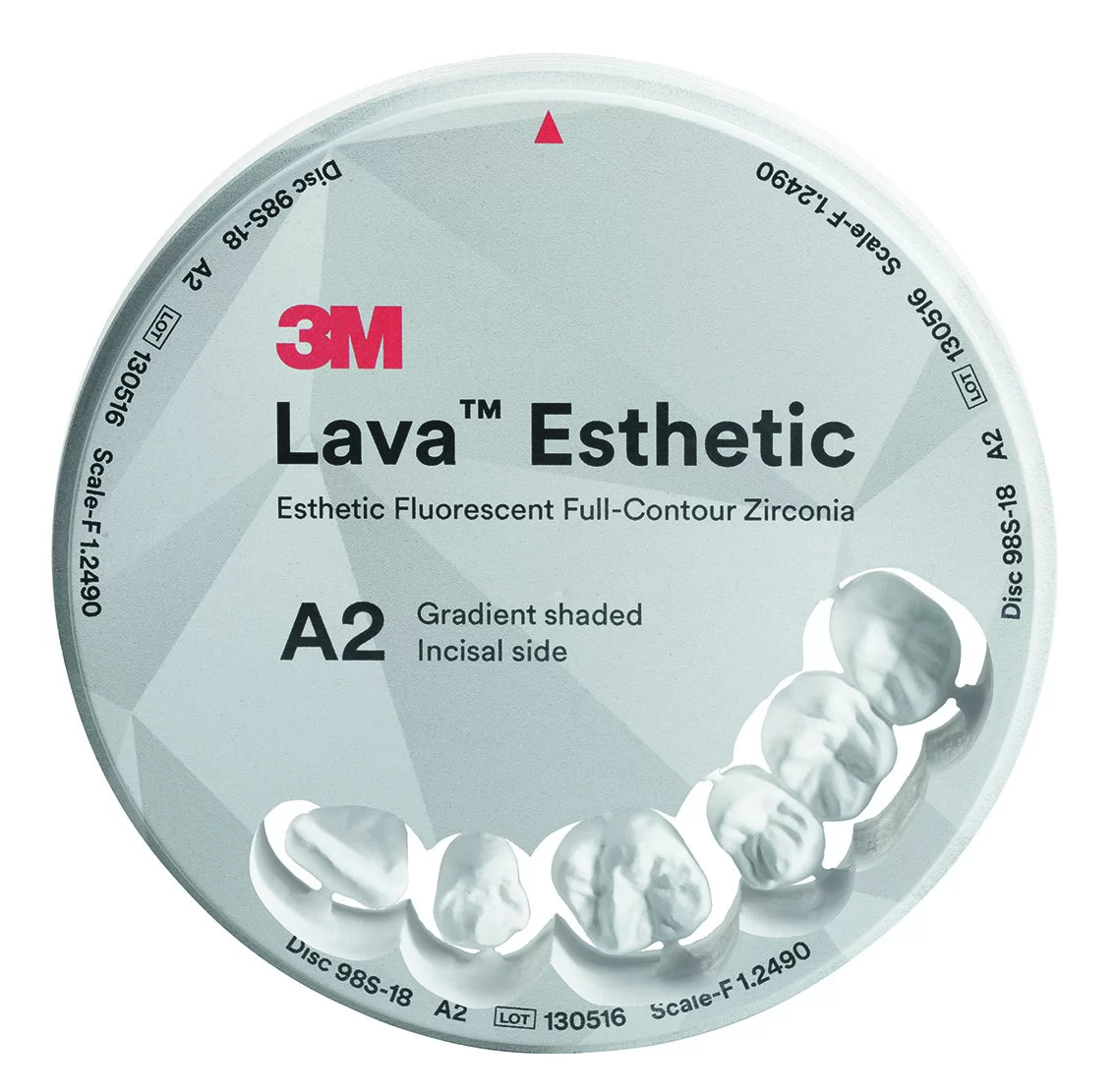
3M Lava Zirconia

TL;DR: 3Y-TZP zirconia (about 3 mol% yttria) reaches 1,200–1,300 MPa but is opaque, so it is used for long-span bridges, molars and implant prostheses. 5Y-PSZ (about 5 mol% yttria) is far more translucent but drops to around 800 MPa, so it is used for monolithic crowns in the esthetic zone and short bridges. Multilayer discs with 3Y in the dentin zone and 5Y at the incisal edge are today’s most common choice for monolithic full-arch work. This article explains the structural difference, indications, minimum thickness and how to choose between the discs used at Khai Nguyen Dental Lab.

Yttria decides both strength and translucency

Dental zirconia is ZrO2 stabilised with yttria (Y2O3). At 3 mol% the material is mostly tetragonal and benefits from transformation toughening: when a crack starts, tetragonal grains around it transform to the monoclinic phase, expand, and squeeze the crack shut. That is why 3Y-TZP reaches 1,200–1,300 MPa. Raising yttria to 5 mol% adds cubic phase, which is optically isotropic and scatters less light, hence the higher translucency, but the cubic phase has no transformation toughening, so strength falls to about 800 MPa and fracture toughness is lower. 4Y sits between the two.

Comparison table

Criterion 3Y-TZP 5Y-PSZ Multilayer (3Y dentin / 5Y incisal)
Discs at Khai Nguyen DD Bio Zirconia, Cercon ht 3M Lava Esthetic IPS e.max ZirCAD Prime
Flexural strength (datasheet) 1,150–1,300 MPa 800 MPa 1,200 MPa (dentin zone)
Translucency Low to medium High, close to LT glass ceramic Gradient from opaque cervical to translucent incisal
Minimum thickness (general guidance) 0.5 mm posterior walls; 0.6–0.8 mm anterior 0.8–1.0 mm 0.6–0.8 mm
Bridge connectors Smallest (per datasheet, often 9 mm² posterior) Larger; manufacturers limit span Connector should sit in the 3Y layer
Indications Long-span bridges, molars, full-arch implant prostheses, layered frameworks, bruxers Monolithic anterior and premolar crowns, 3-unit anterior bridges, zirconia veneers Monolithic full-arch crowns, 3–4 unit bridges, implant restorations in the esthetic zone
Avoid for Monolithic incisor crowns needing high translucency (unless layered) Molar bridges, thin walls, severe bruxism Very long spans where connectors fall in the 5Y layer
In-lab time 2–4 working days for stained and glazed monolithic crowns

Four clinical consequences

1. Do not borrow 3Y strength for a 5Y disc

Many dentists prepare 0.5 mm out of habit with conventional zirconia and then ask for a crown “as translucent as e.max”. With 5Y, a 0.5 mm wall is below the manufacturer’s safe minimum. If translucency is needed, prepare 0.8–1.0 mm or choose a multilayer disc.

2. Bridges: connectors must sit in the 3Y layer

With multilayer discs the technician nests the bridge so the connectors fall in the 3Y dentin layer. Long posterior bridges should be full 3Y, stained, or layered in the esthetic zone.

3. Antagonist wear depends on polishing, not on yttria

Both 3Y and 5Y are kind to opposing enamel when the occlusal surface is mirror-polished. Chairside occlusal adjustment without re-polishing is the main cause of opposing wear.

4. Low-temperature degradation mainly concerns 3Y

The tetragonal phase of 3Y can slowly transform to monoclinic in a moist environment over years; modern discs add a small amount of alumina to limit this. 5Y, with more cubic phase, is less sensitive. Clinically this is not a reason to avoid 3Y posteriorly.

Quick picker

  • Long spans, molars, All-on-X, bruxers: 3Y (DD Bio).
  • Monolithic anterior crowns needing maximum translucency on non-discoloured abutments: 5Y (3M Lava Esthetic).
  • Full-arch monolithic, 3–4 unit bridges, no trade-offs: multilayer (e.max ZirCAD Prime).
  • Heavily discoloured abutments or metal posts: 3Y or multilayer with an opaque cervical layer; consider layering anteriorly.

See also the comparison of zirconia with lithium disilicate and feldspathic, our workshop on indicating zirconia in digital dentistry, and the case-by-case zirconia selection service.

Frequently asked questions

Is 4Y the best of both?

4Y-PSZ (about 900–1,000 MPa) is a reasonable compromise for single crowns and short bridges, but multilayer 3Y/5Y discs solve the same problem while keeping 3Y in the load-bearing zone, so our lab prefers multilayer.

Can zirconia be bonded like e.max?

Zirconia cannot be etched with HF. The recommended protocol is low-pressure alumina air abrasion (50 μm), an MDP-containing primer, then resin cement. For retentive preparations, resin-modified glass ionomer is acceptable.

Can zirconia be used for veneers?

Yes, with 5Y at 0.5 mm or more when masking is needed, but ultra-thin veneers below 0.4 mm should still be lithium disilicate or feldspathic.

If you are weighing up an overseas partner in the first place, start with our guide to Vietnam dental lab outsourcing. Send a case for disc advice through the ordering process or WhatsApp +84 902 945 585.

Written for dentists and technicians. Khai Nguyen Dental Lab manufactures to clinical prescription only and does not sell directly to patients.

Pressed Lithium Disilicate Compared: IPS e.max Press vs GC LiSi Press vs Shofu Vintage LD Press

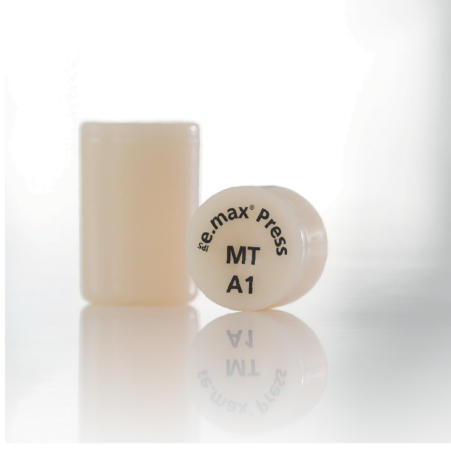
IPS e.max Press

TL;DR: IPS e.max Press (Ivoclar Vivadent, 470 MPa), GC Initial LiSi Press (GC, 508 MPa) and Shofu Vintage LD Press (Shofu, 377 MPa) are all pressed lithium disilicate ceramics for veneers, single crowns, inlays/onlays and short 3-unit bridges (e.max Press up to the second premolar; Vintage LD Press anterior only). The differences are in crystal structure, the range of opacities, the matching layering porcelain and technician preference. This comparison is based on manufacturer datasheets and on pressing all three at Khai Nguyen Dental Lab.

What pressed lithium disilicate is

Lithium disilicate is a glass ceramic with about 70% Li2Si2O5 crystals by volume, giving roughly 380–530 MPa flexural strength depending on the brand, three to four times that of feldspathic porcelain, while keeping translucency and the ability to be etched with hydrofluoric acid for adhesive bonding. In the press technique the ingot is heated and pressed into a lost-wax mould, which allows veneers as thin as 0.3 mm and crowns with tight margins. It is the default material for single anterior units in most esthetic labs.

Comparison table

Criterion IPS e.max Press GC Initial LiSi Press Shofu Vintage LD Press
Manufacturer, origin Ivoclar Vivadent, Liechtenstein GC, Japan Shofu, Japan
Flexural strength (datasheet) 470 MPa 508 MPa 377 MPa (IFU, ISO 6872)
Crystal structure Needle-shaped lithium disilicate crystals, standard size HDM (High Density Micronization): ultra-fine, evenly dispersed crystals Lithium disilicate crystals in a glass matrix optimised for layering and staining
Ingot opacities HT, MT, LT, MO, HO, Impulse (widest range) HT, MT, LT, MO T, MT, LO, MO
Matching layering ceramic IPS e.max Ceram GC Initial LiSi (matched expansion) Vintage LD (layering) and Vintage Art Universal (stains)
Strengths in our lab Longest clinical record; shade system most dentists know; consistent with e.max CAD Very smooth surface after pressing, minimal reaction layer, fast polishing; low wear on opposing enamel Framework, porcelain and stains from one system; ideal for monolithic staining and thin incisal layering
Indications Veneers, anterior and premolar crowns, inlays/onlays/overlays, implant crowns in the esthetic zone, 3-unit bridges: e.max Press up to the second premolar; GC states “small bridges”; Vintage LD Press anterior only (per each manufacturer’s instructions)
Not indicated Molar bridges, long spans, severe bruxism without a splint
In-lab time at Khai Nguyen 2.5–4 working days for stained monolithic crowns (depending on the number of units); 3–5 days for cut-back and layered work

Where the real differences are

1. Strength: 100 MPa does not change the indication

From 377 to 508 MPa is one indication group. None of the three is approved by its manufacturer for molar bridges. Clinical durability is decided by respecting minimum thickness (crowns 1.0–1.5 mm, veneers 0.3–0.5 mm) and by the bonding protocol: 20-second HF etch, silane, light- or dual-cure resin cement.

2. Translucency and masking

All three offer HT ingots for bright natural teeth and LT/MO for discoloured abutments. e.max Press has the widest range, including HO for metal cores; Vintage LD ties each translucency level to a clear indication group; LiSi Press gives even translucency thanks to its fine crystals. For a single central incisor, choosing the right opacity matters more than choosing the brand.

3. Finishing: monolithic stain or cut-back and layer

Monolithic stained and glazed crowns are faster and stronger; cut-back with layered incisal porcelain looks better but adds one or two days and needs a skilled ceramist. Each brand has its own layering ceramic with matched thermal expansion; a lab should not layer one brand’s porcelain on another brand’s pressed core.

4. Wear on opposing teeth

All three are kinder to opposing enamel than unpolished zirconia. GC reports low antagonist wear for LiSi Press thanks to its fine crystalline surface; in practice, proper polishing after occlusal adjustment matters more than the difference between brands.

Which one we use for which case

  • Veneers and central incisor crowns that must match natural neighbours: IPS e.max Press MT or HT, cut back and layered with IPS e.max Ceram when the incisal edge is translucent.
  • Monolithic premolar crowns, inlays/onlays that need fast polishing: GC Initial LiSi Press.
  • Anterior esthetic cases with monolithic staining, framework, porcelain and stains from one system: Shofu Vintage LD Press with Vintage Art Universal.
  • Dentists already used to one shade system: stay with it; consistency between the chairside shade guide and the ingot matters more than technical differences.

Product pages: IPS e.max Press, GC Initial LiSi Press, Shofu Vintage LD Press, and the full comparison of dental ceramics including zirconia and feldspathic.

Frequently asked questions

Is pressed ceramic as strong as zirconia?

No, in flexural strength (roughly 380–530 MPa versus 700–1,300 MPa). But for single crowns and veneers that are bonded correctly, long-term survival of lithium disilicate is very high, for example Ivoclar reports 97.2% survival for posterior IPS e.max CAD crowns at 10 years (manufacturer R&D data).

Can a 3-unit bridge be pressed in lithium disilicate?

Yes, within each manufacturer’s limits: IPS e.max Press up to the second premolar; Shofu Vintage LD Press anterior only (pontic up to 11 mm, connector at least 16 mm²). Molar bridges should be zirconia.

How should pressed lithium disilicate be cemented?

Adhesively with resin cement after HF etching and silane. Conventional cements reduce the strength of glass-ceramic restorations.

Need material advice for a specific case? Send it through the ordering process or WhatsApp +84 902 945 585.

Written for dentists and technicians. Khai Nguyen Dental Lab manufactures to clinical prescription only and does not sell directly to patients.

Outsourcing Dental Lab Work: Vietnam vs China vs India

How to Outsource Dental Lab Work to Vietnam: Complete 2026 Guide

Disclosure: this comparison is written by Khai Nguyen Dental Lab, a laboratory in Vietnam. We have an obvious interest in the outcome, so we have kept the comparison to factors you can verify yourself and avoided claims about individual competitors.

TL;DR: China, India and Vietnam are the three main destinations for outsourced dental lab work. China offers the largest capacity and lowest unit prices on high-volume monolithic work; India offers English-language communication and a growing digital-lab sector; Vietnam sits between them on price with a strong esthetic ceramics tradition, ISO 13485-certified mid-sized labs, and 3–4 day courier links to the US and Australia. The right choice depends on your case mix, not on the country’s reputation.

Why these three countries

All three have a large trained technician workforce, access to the same brand-name materials (3M, Ivoclar Vivadent, Dentsply Sirona, GC, Shofu), CAD/CAM infrastructure and express-courier links to North America, Australia and Europe. The differences are in scale, specialisation, language, regulation and logistics.

Comparison by factor

Factor China India Vietnam
Typical lab profile Very large factories, thousands of technicians, highly automated monolithic production Mix of large export labs and mid-sized digital labs, strong in CAD design services Mid-sized labs with in-house ceramic departments; a few very large volume labs
Best suited for High-volume monolithic zirconia, removables, price-driven contracts Design outsourcing, English-heavy communication, mixed case types Esthetic fixed restorations (layered zirconia, e.max, feldspathic veneers), implant work, lab-to-lab overflow
Unit price (same material) Lowest at volume Low to medium Low to medium; between China and India for esthetic layered work
Language Sales teams in English; technician-level communication often through an intermediary English widely spoken at all levels English at coordinator and management level; technicians communicate through case notes and photos
Quality systems ISO 13485 common in export labs; FDA-registered facilities exist ISO 13485 common in export labs ISO 13485 in export-oriented labs; Ministry of Health Certificates of Free Sale for restorations
Courier transit to US/AU 3–5 days 4–6 days 2–4 days (DHL Express from Ho Chi Minh City)
Time zone vs US East +12/13 h +9.5/10.5 h +11/12 h
Public holidays to plan around Chinese New Year (1–2 weeks), Golden Week Diwali, regional holidays Tết (about a week, late January or February)
Main risk Anonymous production: hard to reach the technician who made your case Wide quality variance between labs; longer shipping Smaller capacity: not the place for tens of thousands of units per month

What the price difference actually buys

Skilled technician labour costs less in all three countries than in the US, Australia or Western Europe, which is the whole reason outsourcing exists. Within the three, China’s scale gives it the lowest unit price on standardised monolithic work. Vietnam and India are close to each other; Vietnam’s edge is in hand-finished esthetic work, where the ceramist’s hours dominate the cost and the country’s tradition of layered porcelain shows. Whatever the country, the real cost is unit price multiplied by remake rate plus your chair time. A lab that saves you 40% per unit but doubles your remakes saves you nothing; read our breakdown of what dentists should expect to pay a Vietnam dental lab.

Quality: material is identical, process is not

A zirconia disc from Dentsply Sirona or a lithium disilicate ingot from Ivoclar is the same in Shenzhen, Chennai or Ho Chi Minh City. What differs is the process around it: design review, sintering-furnace calibration, shade matching under controlled light, occlusal verification on articulated models, and whether a named technician follows your case. Ask any lab in any country for its ISO 13485 certificate, its material invoices, its remake statistics and the name of the technician assigned to your esthetic cases. The answers separate good labs from cheap ones better than the country of origin does.

Communication and time zones

India’s English advantage is real at the technician level. Chinese factories usually route communication through account managers. Vietnamese labs typically have English-speaking coordinators and rely on structured case notes, photos and design previews for technical detail; in practice this works well because most technical communication in dentistry is visual. All three countries are far enough ahead of US time zones that an evening question is answered by the next morning. Australia has the easiest overlap with Vietnam (3–4 hours difference).

Logistics and regulation

Express couriers connect all three countries to the main markets. From Ho Chi Minh City, DHL Express reaches most US, Australian and European destinations in 2–4 days; China is similar, India usually a day or two longer. Custom-made dental restorations are prescribed medical devices and travel with a commercial invoice; clinics should confirm their own country’s import rules for custom devices (for example FDA registration expectations in the US or TGA rules in Australia) and ask the lab which documentation it provides. Vietnam-made restorations from certified labs carry Ministry of Health Certificates of Free Sale.

A practical way to decide

  1. Write down your monthly case mix: how many monolithic units, how many esthetic layered units, how many implant cases.
  2. If monolithic volume dominates and price is the goal, shortlist Chinese and large Vietnamese labs.
  3. If esthetic and implant work dominate, shortlist Vietnamese mid-sized labs and specialised Indian labs.
  4. If you mainly need design services, India and Vietnam both offer next-day CAD.
  5. Run the same 2–3 cases with two labs and compare fit, shade, communication and remake handling before signing anything.

For a comparison within Vietnam, read our honest comparison of the best-known dental labs in Vietnam, and for the full workflow see outsourcing to a Vietnam dental laboratory. Questions about your specific case mix: WhatsApp +84 902 945 585.

Written for dentists and technicians. Khai Nguyen Dental Lab manufactures to clinical prescription only and does not sell directly to patients.

Vietnam Dental Lab Turnaround Time and Shipping: What to Expect

How to Outsource Dental Lab Work to Vietnam: Complete 2026 Guide

TL;DR: Khai Nguyen needs 2–4.5 working days in the lab depending on the material and the number of units, and DHL Express delivers to the US, Australia or Europe in 2–4 days. Realistic door-to-door time for a physical restoration is therefore about 5–9 days from the moment the scan is uploaded; design-only work comes back in 12 hours (24 hours for All-on-X), or 2 hours with the express option. This article explains where the days go, how to compress them, and how to plan patient appointments around an overseas lab.

Where the days go: the four clocks

Turnaround from an overseas lab is not one number but four separate clocks that run one after the other.

  1. Submission and confirmation (0–1 day). The scan is uploaded with the prescription. A good lab confirms the case, flags missing bite scans or unclear margins, and agrees the due date within its next working shift. Vietnam is GMT+7, so a case sent from the US East Coast in the evening is on a technician’s screen before you wake up.
  2. In-lab production (2–4.5 working days). Design in exocad, milling or pressing, sintering, staining or layering, glazing and quality control. Monolithic zirconia is fastest; layered anterior work and implant bridges take longest.
  3. Shipping (2–4 days by DHL Express). Ho Chi Minh City to most US, Australian and European cities. Customs clearance is handled by the courier; delays are rare but possible around public holidays.
  4. Chairside (your clock). Try-in, adjustment, cementation. Cases with a design preview approved by you before production need fewer chairside adjustments.

Production timeline at Khai Nguyen Dental Lab

In-lab working days by material and number of units, from our laboratory brochure:

Units Zirconia Pressed ceramic (ingots) Zirconia + pressed Zirconia on implants
1–3 units 2 days 2.5 days 2.5 days 3 days
4–6 units 2.5 days 3 days 3 days 3.5 days
6–12 units 3 days 3.5 days 3.5 days 4 days
More than 12 units 4 days 4 days 4 days 4.5 days

Cut-back and hand-layered esthetic work usually adds one or two days. Full-arch implant prostheses, wax-ups and surgical guides are scheduled per case. Design-only work (lab to lab) takes 12 hours, 24 hours for All-on-X, with a 2-hour express option: see our dental CAD design service.

Working hours are 08:00–19:00 Indochina Time, Monday to Saturday; the lab is closed on Sundays. Cases received on Vietnamese public holidays (Tết in late January or February is the longest, about a week) are confirmed on the next working day, so ask your lab for its holiday calendar at the start of the year.

Shipping: what to expect from DHL Express

Restorations ship in sealed, padded case boxes with the case photos and prescription copy inside. Each shipment has a tracking number sent to you on dispatch. Transit from Ho Chi Minh City typically takes 2–4 days, depending on the destination country. Import formalities for custom-made dental devices are normally handled by the courier; your lab should provide a commercial invoice and, where the destination requires it, a Certificate of Free Sale. Shipping cost per parcel is the same whether it holds one crown or twenty, so clinics with regular volume batch cases into a weekly or twice-weekly shipment.

Physical impressions travelling to Vietnam add 2–4 days before the lab clock starts. This is the single biggest reason to move to an intraoral scanner if you plan to outsource: a digital case starts production the same day it is scanned.

How to compress the timeline

  • Scan instead of ship. STL, PLY or DCM files start production immediately; impressions lose 2–4 days in transit.
  • Send complete data the first time. Bite scan, pre-op scan for esthetic cases, shade photos with a tab, implant system and scan body. Every clarification email costs a working day because of the time difference.
  • Approve a design preview. Ten minutes reviewing contacts and contour before production saves a remake cycle of a week or more.
  • Batch shipments. Agree a fixed dispatch day; cases finished earlier wait one or two days but arrive together and cheaper.
  • Keep a domestic lab for true emergencies. An overseas lab is the right choice for planned work, not for a same-day temporary.

Planning appointments around an overseas lab

Book the delivery appointment 10 working days after the scan for standard crowns and 12–14 days for esthetic or implant cases. That leaves a buffer for a customs delay or a design revision without moving the patient. If your lab reports the shipment tracking number on dispatch, your front desk can confirm the appointment two days before delivery with confidence. Clinics working with us in the US and Australia typically settle on a weekly rhythm: scans go out Monday to Wednesday, cases ship the following week, and delivery appointments are booked the week after.

What “rush” really means

In-lab time can be shortened for digital monolithic work when you tell us the deadline at submission, but shipping cannot be shortened below courier transit. A realistic rush for a zirconia crown is about five days door to door; anything faster requires a domestic lab. Be wary of any overseas lab quoting two- or three-day delivery for physical restorations.

Frequently asked questions

Does the time difference slow communication?

It helps more than it hurts. Vietnam is 11–15 hours ahead of US time zones and 3–4 hours behind eastern Australia, so questions sent at the end of your day are answered by the start of your next one. For urgent clarifications we use WhatsApp during overlapping hours.

What if a case is delayed?

The lab should tell you before the due date, not after. At Khai Nguyen every case has a due date agreed at confirmation, and any change is communicated with a new date and the reason.

Can I track the case inside the lab?

Yes. Status updates are sent at confirmation, at design preview (if requested), at dispatch with the tracking number, and on delivery.

Ready to test the timeline with a real case? Read the ordering process, the outsourcing FAQ, or contact us on WhatsApp +84 902 945 585. For the bigger picture, see our guide to outsourcing to a Vietnam dental laboratory.

Written for dentists and technicians. Khai Nguyen Dental Lab manufactures to clinical prescription only and does not sell directly to patients.

Best Dental Labs in Vietnam (2026): An Honest Comparison

Best Dental Labs in Vietnam (2026): An Honest Comparison

Disclosure: this guide is published by Khai Nguyen Dental Lab, one of the laboratories listed below. To keep it useful, we compare every lab — including ourselves — on the same publicly verifiable criteria, and we tell you honestly which lab fits which need. Information about other laboratories comes from their public websites as of July 2026; always verify details directly with each lab.

TL;DR: Vietnam has become one of the strongest dental outsourcing destinations in Asia. The best-known dental labs in Vietnam include Khai Nguyen Dental Lab (esthetic fixed restorations, ISO 13485:2016), Lavina (largest production scale), XDENT Lab (removables), Vietnam Dental Lab (operating since 2008), and Thanh Dental Laboratory (since 1999). The right choice depends on what you outsource: esthetic fixed work, high-volume production, or removable solutions.

How we compared

  • Certifications — ISO 13485 quality management, industry memberships.
  • Specialization — what each lab is genuinely known for, not what it merely offers.
  • Materials — named, traceable brands vs. generic “zirconia”.
  • Track record — founding year and stated production capacity.
  • International workflow — digital case acceptance, English support, export markets.

Comparison at a glance

Lab Founded Certifications Known for
Khai Nguyen Dental Lab 2017 ISO 13485:2016 Esthetic fixed restorations (zirconia, e.max, veneers, implant)
Lavina Dental Lab — see website Largest scale: 700+ technicians, ~20,000 cases/month (per its website)
XDENT Lab 2017 ISO 13485, NADL Trusted Supplier Lab-to-lab removable solutions
Vietnam Dental Lab 2008 see website Full-service, 12,000+ restorations/year (per its website)
Thanh Dental Laboratory 1999 see website Longest-operating: crowns, bridges, removables, implants
Viet Dental Lab — see website CAD/CAM digital outsourcing services
NEC Dental Lab — see website International outsourcing services

1. Khai Nguyen Dental Lab — best for esthetic fixed restorations

Based in Ho Chi Minh City near Tan Son Nhat International Airport, Khai Nguyen Dental Lab is an ISO 13485:2016-certified full-service Vietnam dental laboratory founded in 2017. The lab focuses on esthetic fixed work — full-contour zirconia crowns and bridges, IPS e.max and GC LiSi veneers, implant restorations — produced exclusively from genuine materials by 3M, Dentsply Sirona, Ivoclar, GC and Shofu, with in-lab production times of 2–4.5 working days and warranties from 6 months to 15 years. It serves clinics and labs in the US, Australia and Europe through fully digital workflows (STL/PLY from all major intraoral scanners) as a Vietnam outsourcing dental laboratory.

Best for: dentists and labs that prioritize anterior esthetics and branded materials over raw volume. (Yes — this is us. Judge us by the criteria above, or start with a trial case.)

2. Lavina Dental Lab — best for very high volume

According to its website, Lavina is the biggest outsourcing dental laboratory in Vietnam, with more than 700 technicians, multiple CAD/CAM production lines and a stated capacity of around 20,000 cases per month. That scale makes it a natural shortlist candidate for large lab-to-lab contracts where throughput is the top priority.

Best for: high-volume lab-to-lab outsourcing contracts.

3. XDENT Lab — best for removables to the US market

Founded in 2017, XDENT Lab positions itself as a lab-to-lab manufacturing partner with two facilities, ISO 13485 certification and recognition as a Trusted Supplier by the National Association of Dental Laboratories (NADL). Its stated specialization is high-quality removable solutions.

Best for: US laboratories outsourcing removable prosthetics with compliance requirements.

4. Vietnam Dental Lab — best for an established full-service track record

Operating since 2008, Vietnam Dental Lab states it fabricates more than 12,000 restorations annually across crowns, bridges, implants and removables, with a standard turnaround of about 7 business days for most orders, serving both local and export markets.

Best for: practices that value a long, documented operating history.

5. Thanh Dental Laboratory — the longest-operating name

Founded in 1999, Thanh Dental Laboratory is among the oldest dental labs in Vietnam, offering custom crowns and bridges, ceramics, removable full and partial dentures, and implant restorations at competitive prices.

Best for: buyers who weight decades of operating experience heavily.

6. Viet Dental Lab — digital CAD/CAM outsourcing

Viet Dental Lab focuses on CAD/CAM outsourcing services — digital design and manufacturing for international clients.

Best for: design-only (CAD) outsourcing alongside physical production quotes.

7. NEC Dental Lab — worth a comparison quote

NEC Dental Lab offers outsourcing services to international clients and is worth including when you collect comparison quotes.

Best for: rounding out a request-for-quote shortlist.

How to choose between them

  • Esthetic fixed work (veneers, anterior zirconia, e.max): shortlist Khai Nguyen.
  • Tens of thousands of units per month: talk to Lavina first.
  • Removables for the US with FDA paperwork: XDENT is built for that.
  • Longest paper trail: Thanh (1999) and Vietnam Dental Lab (2008).
  • Whichever you choose: ask for the ISO certificate, named material brands, warranty terms in writing — and run 2–3 trial cases before signing anything. Our outsourcing FAQ lists the questions worth asking any lab, including us.

Frequently asked questions

Are Vietnamese dental labs reliable?

The leading labs run ISO 13485-certified quality systems, use the same branded materials as Western labs (3M, Ivoclar, Dentsply Sirona, GC) and serve US, Australian and European clients daily. As anywhere, reliability varies by lab — certifications, named materials and trial cases are the filter.

How were these labs selected and ordered?

From the labs most frequently cited in international coverage of the Vietnamese market, compared on public, verifiable criteria (certifications, specialization, track record). The publisher of this guide, Khai Nguyen Dental Lab, is listed first with its specialization stated plainly — read the disclosure at the top and judge by the criteria.

What is the easiest way to test a Vietnamese lab?

Send one or two digital trial cases (STL/PLY export from your scanner). You get a real read on fit, esthetics and communication with almost no risk. Contact us to set one up.

Written for dentists and technicians. Khai Nguyen Dental Lab manufactures to clinical prescription only and does not sell directly to patients.

Working With a Vietnam Dental Laboratory: A Guide for US & Australian Dentists

Working With a Vietnam Dental Laboratory: A Guide for US & Australian Dentists

Dentists in the United States and Australia make up a growing share of international partners working with Vietnamese labs. The workflow is simpler than most expect — but there are practical details about shipping, time zones and compliance worth understanding before your first case. Here is how working with a Vietnam dental laboratory looks from a US or Australian practice.

The digital case: no borders at all

If your practice scans intraorally, outsourcing to Vietnam is functionally identical to sending work across town. Export STL/PLY files from iTero, 3Shape TRIOS or Medit, attach the prescription and shade photos, and the case is in production the same day. The finished restoration ships back by international courier. For many partners, the only physical logistics in the entire relationship is the outbound delivery of finished work.

Shipping physical cases

For impression- or model-based work, DHL, FedEx and UPS connect the US and Australia to Ho Chi Minh City reliably — our laboratory sits close to Tan Son Nhat International Airport. Practical tips from our partners:

  • Batch multiple cases per shipment to spread courier cost.
  • Use rigid boxes with foam lining; note the case IDs on the outside.
  • Declare contents accurately as dental impressions/models for smooth customs clearance.

Time zones work in your favor

Vietnam is 11–15 hours ahead of US time zones and 3–4 hours behind eastern Australia. In practice this means cases sent at the end of your workday are processed while you sleep — questions come back before your next morning, and design approvals rarely cost a full day. Our customer care team is available around the clock precisely because our partners span these time zones.

Quality and compliance questions we hear most

“What quality system does the lab run?” Khai Nguyen Dental Lab is certified to ISO 13485:2016 — the international quality management standard for medical devices — and works exclusively with genuine, traceable materials from 3M, Dentsply Sirona, Ivoclar, GC and Shofu.

“Who is responsible for the restoration?” The same contractual relationship you have with a domestic lab: specifications, warranty and remake terms in writing. Our warranty runs from 6 months to 15 years by product line — see policies.

“Can I approve the design before production?” Yes — CAD design screenshots for esthetic cases are standard practice for our Vietnam outsourcing dental laboratory partners.

What a first month typically looks like

  1. Week 1: a trial case or two — usually posterior zirconia crowns, the simplest way to judge fit and shade communication.
  2. Week 2–3: a small batch across your common indications; agree on prescription templates and photo standards.
  3. Week 4: review outcomes and remake rate together, then settle a price list and shipping cadence that fits your volume.

Start the conversation

The lowest-risk way to evaluate any overseas lab is one real case. Read the outsourcing FAQ for file formats and turnaround details, or contact our team — tell us your scanner and typical case mix, and we’ll set up your first case.

Written for dentists and technicians. Khai Nguyen Dental Lab manufactures to clinical prescription only and does not sell directly to patients.

Vietnam Dental Lab Prices: What Dentists Should Expect in 2026

Vietnam Dental Lab Prices: What Dentists Should Expect in 2026

“How much does a Vietnam dental lab actually cost?” is the first question every dentist asks. We do not publish a single per-unit figure, and this page explains honestly why — then gives you everything else: what drives the number, what every quote includes, and exactly what to send us so you get a real one. Send us a case profile and we come back with a priced quote within 24 hours.

Why there is no price list on this page

A full-contour posterior zirconia crown and a hand-layered anterior veneer are not the same piece of work. Neither are a single unit and a steady monthly caseload. Publishing one number would mean quoting the simple case and the demanding one at the same price, and one of those two figures would be wrong for you.

This is also the norm in lab-to-dentist work: wholesale laboratory pricing is quoted against a case mix, not posted as a retail list. What you will find published below is everything that is genuinely fixed — turnaround, warranty, remake terms, what is included — so the only variable left is the price itself.

What determines the price of a unit

  • Restoration type: a full-contour zirconia crown, a layered e.max veneer and an implant bridge sit at very different points on the price list.
  • Material brand and tier: premium multilayer zirconia (IPS e.max ZirCAD Prime, Lava Esthetic) costs more than standard discs — in any country. We name the disc brand and translucency class on every quote.
  • Complexity: shade matching, characterisation, cut-back and layering add technician hours, and they are the hours that show in the mouth.
  • Volume and consistency: steady monthly volume earns contract pricing that single cases do not.
  • Shipping model: fully digital cases carry no inbound freight; physical models add courier costs each way.

What every quote includes

These are not surprise extras billed later. They are part of the unit price on every case:

  • Named materials — disc brand and translucency class stated on the quote, not just the word “zirconia”.
  • Design approval before milling, with screenshots sent for sign-off on esthetic cases.
  • Shade work from photographs, including cross-polarised images where you supply them.
  • QC documentation and batch traceability under our ISO 13485:2016 certified quality system, certificate 9199293420717-MED.
  • Warranty of 6 months to 15 years depending on the product line — full terms in our policies.
  • A written remake policy that states who pays for what, before anything goes wrong. See the remake policy.

What is fixed and published already

Turnaround is not negotiable per case, so we publish it. Book the delivery appointment 10 working days after the scan for standard crowns and 12 to 14 days for esthetic or implant cases. DHL Express transit from Ho Chi Minh City runs 3 to 4 days to the US, Australia and Western Europe. Digital files start production immediately; physical impressions lose 3 to 4 days in transit before the lab clock starts. Full detail in turnaround and shipping.

How to compare quotes like a lab owner

A cheap unit price can hide expensive problems. When you compare our quote against your current lab, check the same four things on both:

  • Named materials on the quote — “zirconia” is not a brand. Insist on the disc brand and translucency class.
  • Remake policy — who pays for shipping and production when a unit needs to be redone?
  • Warranty length and what voids it.
  • What the price assumes about hand work — a monolithic stained unit and a layered one are different products at any price point.

The hidden line item: remake rate

The true cost of lab work is unit price × (1 + remake rate) plus chair time. A lab that saves you 40% per unit but doubles your remakes saves you nothing. This is why we recommend judging any Vietnam outsourcing dental laboratory, including this one, on trial cases and documented QC rather than on the price list alone.

What to send us for a quote

The more of this we have, the more precise the quote — and the less back and forth before you can compare it against your current lab:

  • Restoration types and rough monthly volume for each.
  • Materials you currently use, or the clinical outcome you want if you are open to alternatives.
  • Digital or physical workflow, and which scanner if digital.
  • Whether you need layered esthetic work or mainly full-contour posterior units.
  • Your current remake rate, if you track it — it tells us where to focus.

Our commitment: a priced quote within 24 hours of receiving your case profile, quoted line by line against your actual case mix rather than a generic list. If your profile arrives outside business hours in Vietnam (GMT+7), the clock starts the next working morning.

Send us that profile to start. If you are still researching, our outsourcing FAQ covers shipping, turnaround and quality standards in depth, and how to compare labs in Vietnam sets out what to check before you send a first case.

Written for dentists and technicians. Khai Nguyen Dental Lab manufactures to clinical prescription only and does not sell directly to patients.

What Skills Does a Dental Prosthetic Technician Need?

What Skills Does a Dental Prosthetic Technician Need?

A dental prosthetic technician supports dentists and clinics in fabricating dental prostheses, orthodontic appliances and other treatment aids (anti-snoring devices, bleaching trays, bite splints and more). At a Vietnam dental laboratory, this is a technical, precision-driven craft that requires the technician to be skillful and meticulous in every detail, combined with expertise in restorative dentistry.

Beyond a solid grasp of technology and esthetics, and assured hands-on skill, a technician is someone able to manage the technical equipment of a dental lab, work in a team or independently, and take part in training.

Job opportunities for dental prosthetic technicians are wide open, as demand for beauty and healthcare keeps growing.

In any healthcare field that protects human health, those who work in it must have certain qualities and skills. For a dental prosthetic technician at Khai Nguyen Dental Lab — fabricating prostheses and orthodontic appliances that are meticulous and perfect down to the smallest detail — the following skills are essential:

1. Dexterity, meticulousness and a strong eye for esthetics

  • Every patient has a different dental problem and needs a dedicated lab design to correct it. So during fabrication, even a tiny deviation from the design, or a design that doesn’t match the occlusal model, can render the restoration unusable.
  • The technician must therefore understand the patient’s oral structure thoroughly and be extremely meticulous in fabricating the components used for treatment.
  • An eye for esthetics is also needed to choose a material color that matches each patient’s tooth shade. Translucency, opacity and the steps used to apply color must all be attended to in detail.

2. Intense concentration at work

  • Along with care and meticulousness, intense concentration is needed when selecting materials and tooth colors.
  • Components such as crowns, bridges and dentures are all milled and turned by modern machines — but this counts for little if the design step against the occlusal model contains errors, or if the fabrication plan is not optimal.
A dental technician working with precision at Khai Nguyen Dental Lab

3. Listening and communication

  • Listen to and absorb input from experienced dental technicians, dentists and industry experts.
  • Listen to helpful sharing and feedback from colleagues to improve the quality of your own work.
  • Good communication, strong teamwork and smooth coordination help your team finish products faster and with higher quality — and make exchanges with dentists easier and quicker.

4. Time management

  • Dental prosthetic technicians must manage their time to complete work on schedule, so the dentist can continue treatment for the patient as promised and make adjustments if needed.

5. Patience, perseverance, care and continuous learning

  • Dental prosthetics is far from simple. Creating a flawless product cannot be done overnight; it requires the technician to persevere in learning and absorbing knowledge and experience from department heads and industry experts.

Patience and precision in dental prosthetics

Perseverance, patience and meticulousness in dental restoration

6. Courage and the ability to handle work pressure

  • Returns for adjustment are unavoidable, along with no small amount of feedback from dentists. The job therefore requires the technician to cultivate an optimistic, cheerful spirit, control their emotions, and calmly take in feedback to adapt to the customer.

7. Sharp observation and accurate judgment

  • Beyond attention to detail, technicians should observe other highly skilled, experienced technicians to draw lessons for their own work.
  • Sharp judgment ensures precision at every step of fabrication so the product reaches the highest level of perfection.

8. Good health, stamina and the ability to work long hours

  • The work involves sitting in one place for long periods, with rotating shifts to meet clinic delivery deadlines. Technicians must therefore keep themselves in good health; otherwise it is hard to last long in this line of work.

Written for dentists and technicians. Khai Nguyen Dental Lab manufactures to clinical prescription only and does not sell directly to patients.

The 5 Core Values Behind Khai Nguyen Dental Lab’s Remarkable Growth

5 Giá trị cốt lõi tạo nên sự phát triển vượt bậc của Khai Nguyên Dental Lab

Everyone has their own formula for success. But in the end, it always requires resonance between individual effort and the company — a resonance built on the company’s shared goals.

That is why the people of Khai Nguyen Dental Lab always take our 5 core values as the ultimate destination for every individual and for the company as a whole.

1. Ethics

Our leadership always treats human ethics as the root of development, because it is the first foundational value behind the company’s success.

In any field that protects human health within healthcare, those who work in it must have certain qualities. The same is true for a dental prosthetic technician: ethics is the quality that creates a friendly working environment and produces quality products and services that are meticulous and perfect down to the smallest detail.

That is why we at Khai Nguyen Dental Lab strive wholeheartedly for the growth of each individual.

2. Dedication

We always serve wholeheartedly and with full effort for our customers’ benefit, earning their trust and affection as a friend and a companion in their career.

This helps Khai Nguyen Dental Lab deliver the most perfect service quality.

The dedicated team at Khai Nguyen Dental Lab

The people at Khai Nguyen Dental Lab are always dedicated to their work

3. Adaptability

We proactively learn, innovate and stay ready to change in order to grow. We always encourage new ideas and keep updating our knowledge and technology.

At the company, every team member is continually enriched by the experience of leading industry experts — managers and department heads with 20+ years of experience. A culture of listening and openness is always encouraged to spark creativity, so we can create products best suited to each patient’s oral structure.

Khai Nguyen Dental Lab technicians at work

4. Responsibility

Taking responsibility for one’s words and actions is a principle every team member at Khai Nguyen Dental Lab is trained in.

We speak up when we see something that isn’t right. Sometimes a dentist’s prescription and impression arrive at our technical department without full clarity — in which case Khai Nguyen Dental Lab immediately calls the dentist back to verify, advise and agree on the most suitable treatment plan for the patient.

No excuses, no blame — we see the work through to the end while keeping our joy and passion for it.

5. Reliability

We commit to providing the most suitable and best services and products for our customers’ dental health and beauty. We guarantee accurate delivery times and operate with a standardized system.

We apply these 5 core values at every stage of production to ensure precision in every detail of every tooth unit.

At Khai Nguyen Dental Lab, we always believe that you can’t achieve anything great unless you start from the smallest things.

Written for dentists and technicians. Khai Nguyen Dental Lab manufactures to clinical prescription only and does not sell directly to patients.


WhatsApp