


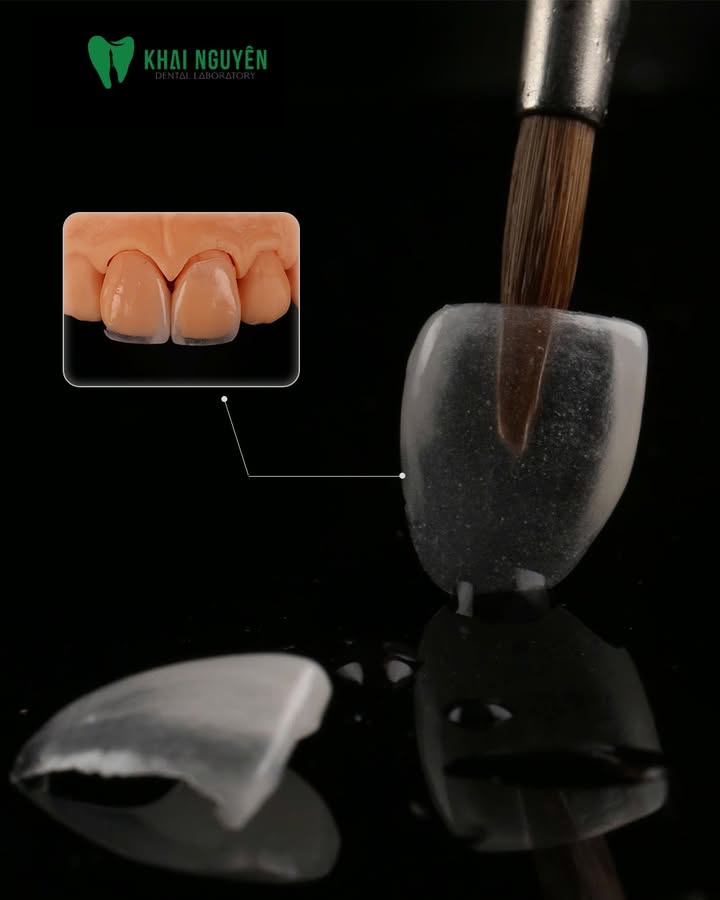
Two central incisors, two hand-layered feldspathic veneers. It sounds contained, and it is the most demanding esthetic group a laboratory takes on.
Why teeth 11 and 21 are difficult
On a full arch, the lab sets its own shade and form reference and applies it throughout. On 11 and 21 the reference is already there: the patient’s own 12 and 22. The two new veneers have to match them on base shade, incisal translucency, cervical saturation and the way the surface catches light.
There is a second factor. The central incisors sit at the middle of the smile and mirror each other. A few tenths of a millimetre of difference in length or axial inclination shows immediately, while the same deviation on a molar goes unnoticed.
Why feldspathic, and why hand layering
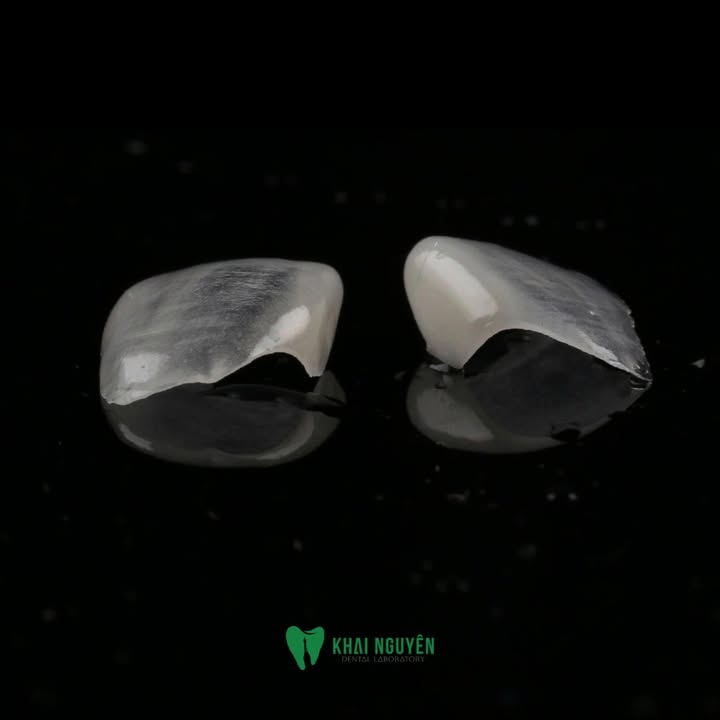
Feldspathic ceramic produces the closest optical match to natural enamel and can be made very thin, which preserves tooth structure. In exchange it lacks the strength of lithium disilicate or zirconia and depends entirely on the quality of the bond.
Layering by hand lets the technician place opacity at the cervical, the transition through the body, and translucency with a halo effect at the incisal edge the way natural enamel behaves. That is the part a machine does not replace.
What clinicians can use from this
On a two-central case, the shade photographs matter more than the written shade. Take them with the shade tab in frame, before the teeth dehydrate, and add an angled view so the lab can read incisal translucency.
See feldspathic non-prep veneers, or contact our team.
Choosing between the two materials? See feldspathic or e.max veneers: how to choose.
Written for dentists and technicians. Khai Nguyen Dental Lab manufactures to clinical prescription only and does not sell directly to patients.