


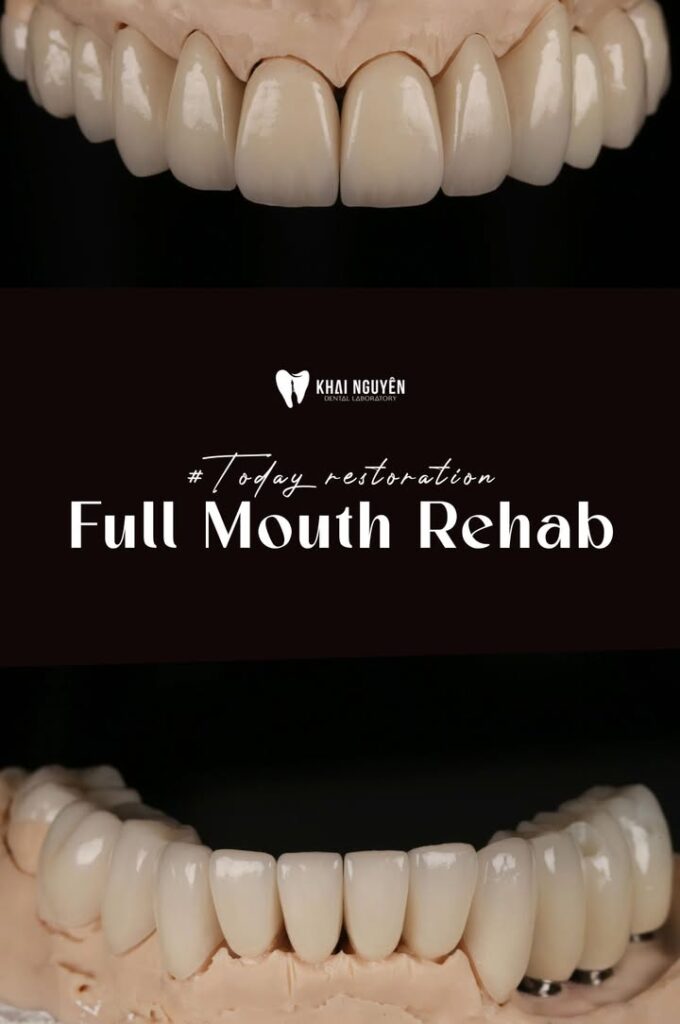
A full-mouth case with an increase in vertical dimension, recently completed at Khai Nguyen, combining veneers, onlays, ceramic crowns and implant-supported restorations in one plan.
Two challenges when a case mixes restoration types
Controlling the occlusion. Raising the vertical dimension changes the whole inter-arch relationship. Every group has to be built to the same occlusal plane and the same guidance, otherwise one group contacts early and another sits out of occlusion.
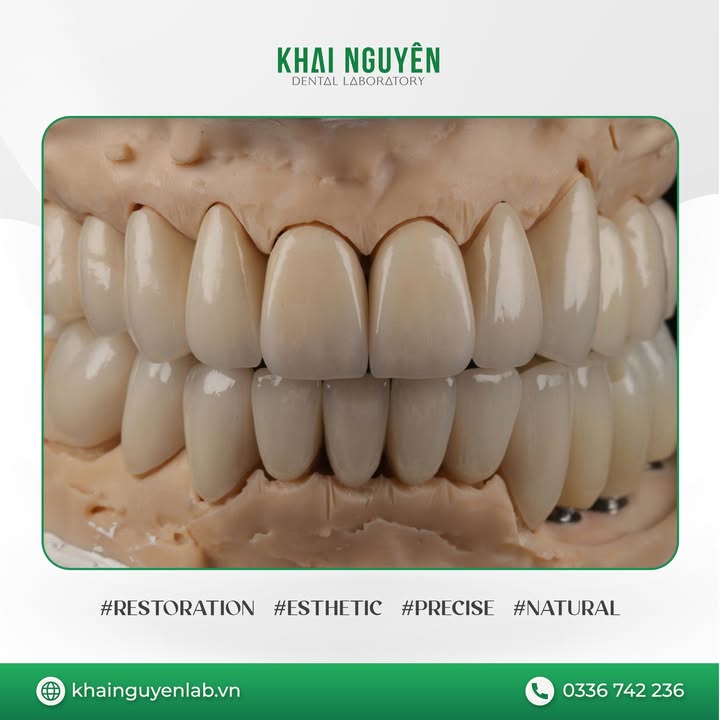
Keeping shade consistent across different restoration types. This part is routinely underestimated. Veneers are thin, so the preparation shade shows through strongly. Onlays are thicker occlusally. Crowns cover the whole preparation and can mask the substrate. Implant restorations have no natural preparation beneath them at all, only an abutment. Those four groups start from completely different backgrounds, and the result has to read as one set of teeth.
How the lab handles it
The case is planned as a whole rather than built group by group and assembled afterwards. The technician fixes the occlusal plane and the target shade for the entire arch first, then works backwards to the thickness and opacity each group needs so that all of them arrive at the same colour.
What clinicians can use from this
For a mixed case, three things should be settled before production: how much the bite is being raised, the actual preparation shade in each zone, and the target shade. A wax-up or mock-up the patient has already approved shortens try-in considerably.
See our restorations range, or contact our team.
Written for dentists and technicians. Khai Nguyen Dental Lab manufactures to clinical prescription only and does not sell directly to patients.