

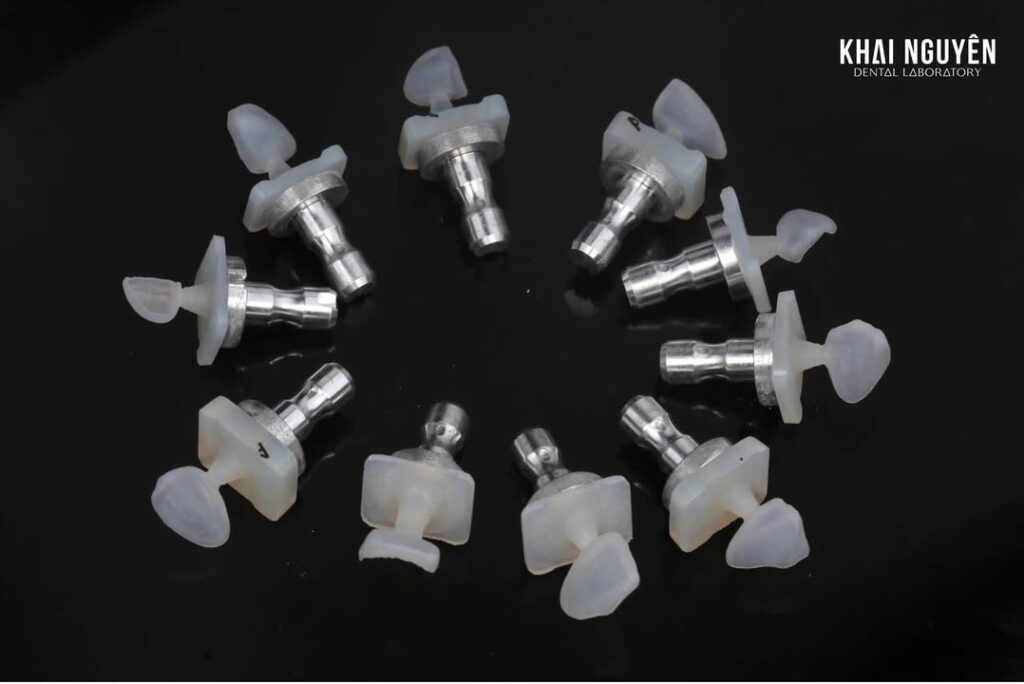
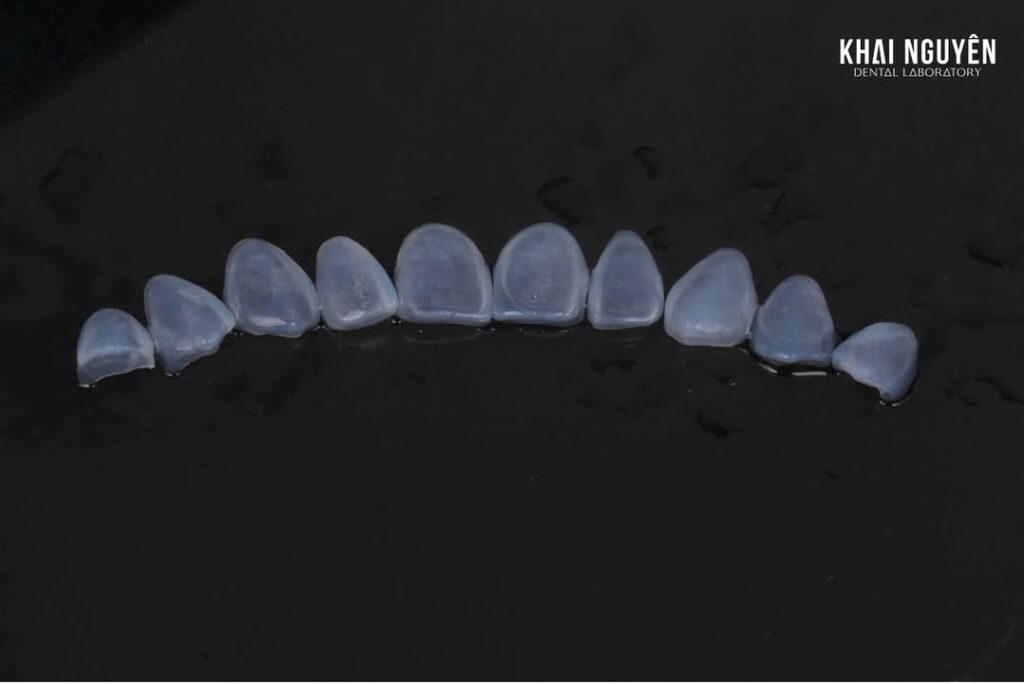
A ten-unit upper veneer case in Amber Mill, shade 1M1 to 1M2. What makes this case worth recording is that the finished restoration follows the wax-up design exactly.
Case parameters
- Restoration: ten upper veneers
- Material: Amber Mill
- Shade: 1M1 to 1M2
Why following the wax-up matters
In an esthetic workflow, the wax-up is the design the clinician and patient agree on before any tooth is prepared. If the final restoration drifts from it, everything that was agreed loses its force: the patient expected one shape and receives another.
In a CAD/CAM workflow the wax-up is digitised and becomes the reference for every step that follows. The restoration is milled from that same dataset, so the difference between the approved design and the delivered result is close to zero.
The practical benefit
When the finished work reproduces the original design, quality control becomes straightforward: compare the restoration against the wax-up rather than judging it subjectively. Chair time at try-in also shortens, because the form was approved in advance.
What clinicians can use from this
On a multi-unit esthetic case, time invested in the wax-up and mock-up early saves more time later. Sending the lab a wax-up the patient has already approved, together with intraoral mock-up photographs, is the fastest route to a restoration that meets expectations.
See our esthetic restorations range, or contact our team.
Written for dentists and technicians. Khai Nguyen Dental Lab manufactures to clinical prescription only and does not sell directly to patients.