


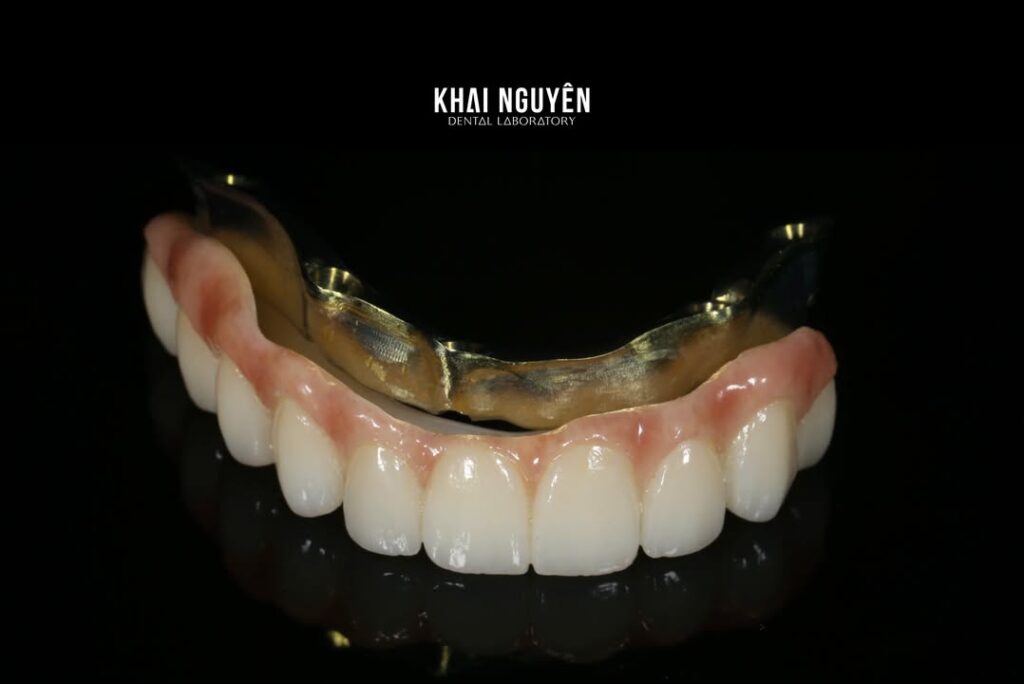
Bar-supported implant restorations demand close coordination between clinic and laboratory, and precision at every step.
Why a bar is unforgiving on tolerance
On a natural tooth, the periodontal ligament allows several tens of microns of movement, enough to absorb part of a restoration’s discrepancy. An implant integrates directly with bone and has almost none of that capacity.
A bar joining several implants therefore has to seat passively: place it and it sits, without tightening screws to draw it into position. If it has to be pulled in, that residual load stays in the system and shows up later as a loosening screw, a fractured screw, or bone loss around the implant.
Where the process is controlled
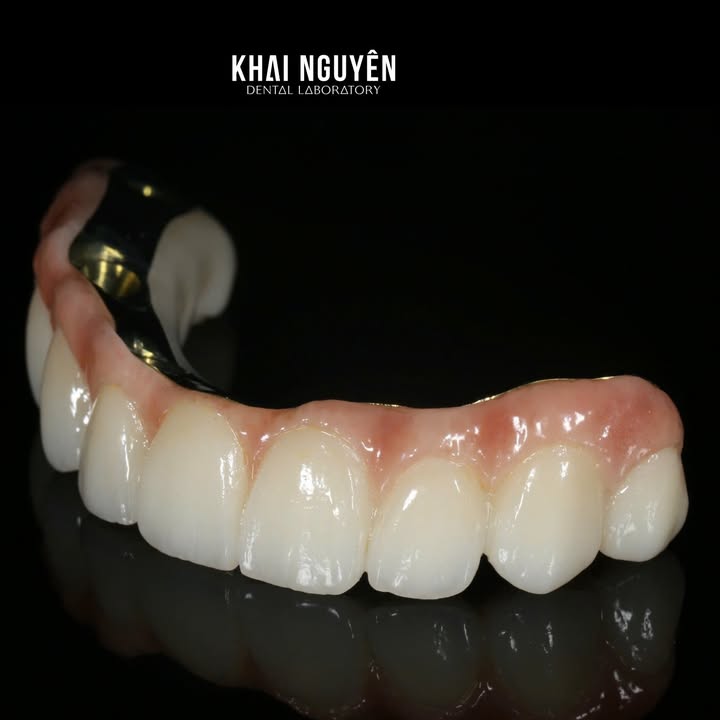
Accuracy on a bar case does not come from one step but from a chain: recording implant positions by impression or scan, transferring them to the model without distortion, fabricating the bar, then verifying fit before any esthetic work begins. An error at any stage carries into the next.
At Khai Nguyen these cases follow a workflow with a checkpoint at each stage, because catching a discrepancy at the bar stage costs far less than finding it after the ceramic is on.
What clinicians can use from this
On a bar case, the quality of the implant position record drives most of the result. With a conventional impression, splint the impression copings together. With a digital workflow, use scan bodies matched to the system and verify with a confirmation scan.
See implant restorations, or contact our team.
Written for dentists and technicians. Khai Nguyen Dental Lab manufactures to clinical prescription only and does not sell directly to patients.