


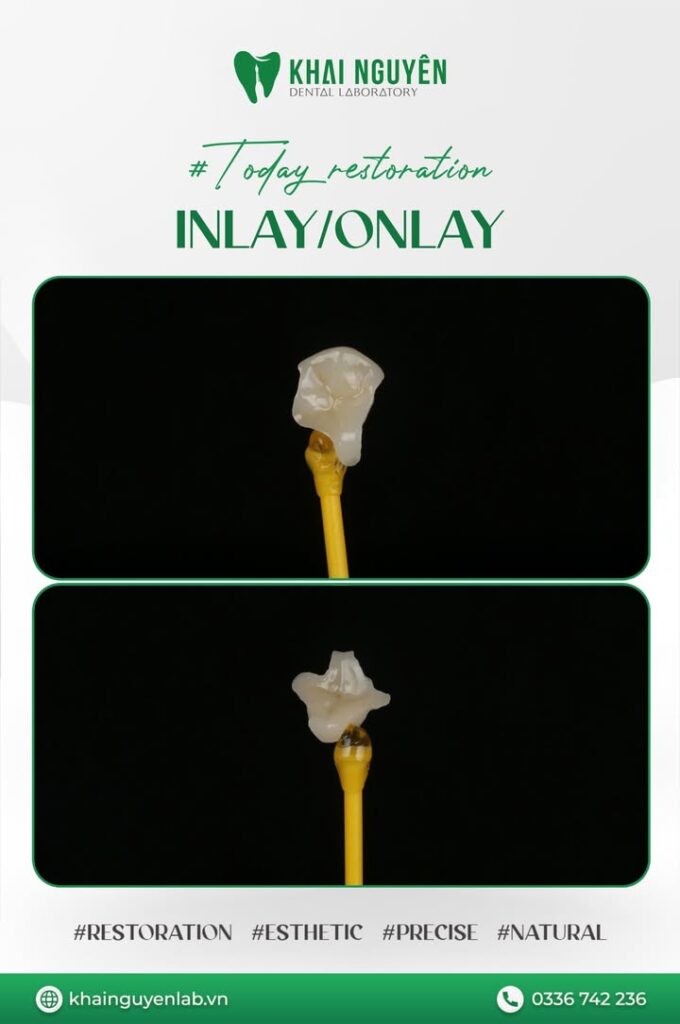
Not every case is a full smile makeover. Every so often the bench comes back to a small restoration such as a single inlay, and this group has a difficulty of its own.
Why inlays and onlays are harder than they look
An inlay looks simple because it is one piece of ceramic. Being small is exactly what removes the margin for error. A crown wraps the preparation and has walls that can absorb a discrepancy; an inlay sits inside the cavity, so its finish line is exposed on the occlusal surface, where the patient’s tongue touches it every day and where food packs if the fit is not right.
Two requirements have to be met at once. First, marginal fit around the entire cavity outline, not at a few points. Second, occlusal anatomy that continues into the remaining tooth structure: grooves, marginal ridges and cusps have to follow the direction of that particular tooth rather than a standard shape pulled from a library.
What the lab does
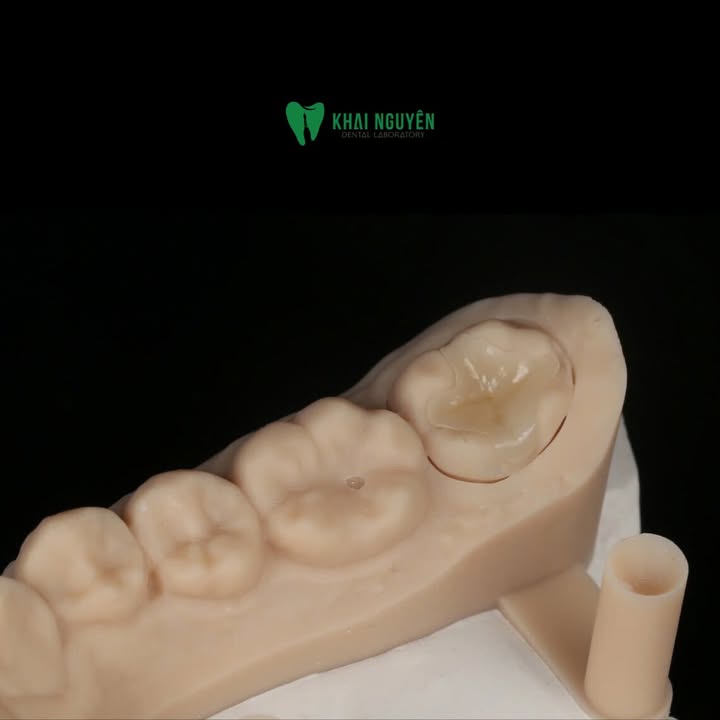
The technician starts by reading the cavity form the clinician prepared, then rebuilds the missing structure along the existing groove and cusp directions. When the ceramic seats cleanly and the junction almost disappears, it means both the preparation and the fabrication were right.
What clinicians can use from this
For inlays and onlays, impression quality drives most of the outcome. A clear finish line, a cavity without unnecessary sharp internal angles, and a shade photograph taken before the tooth dehydrates all help the lab considerably. If the cavity is too shallow in a load-bearing area, raise it with the lab before production rather than at try-in.
See onlay, inlay and overlay, or contact our team about a specific case.
Written for dentists and technicians. Khai Nguyen Dental Lab manufactures to clinical prescription only and does not sell directly to patients.